Articles
Top Rated Connected Worker Apps: Why QR Access Defines the Future of the Line
Published: January 9, 2026
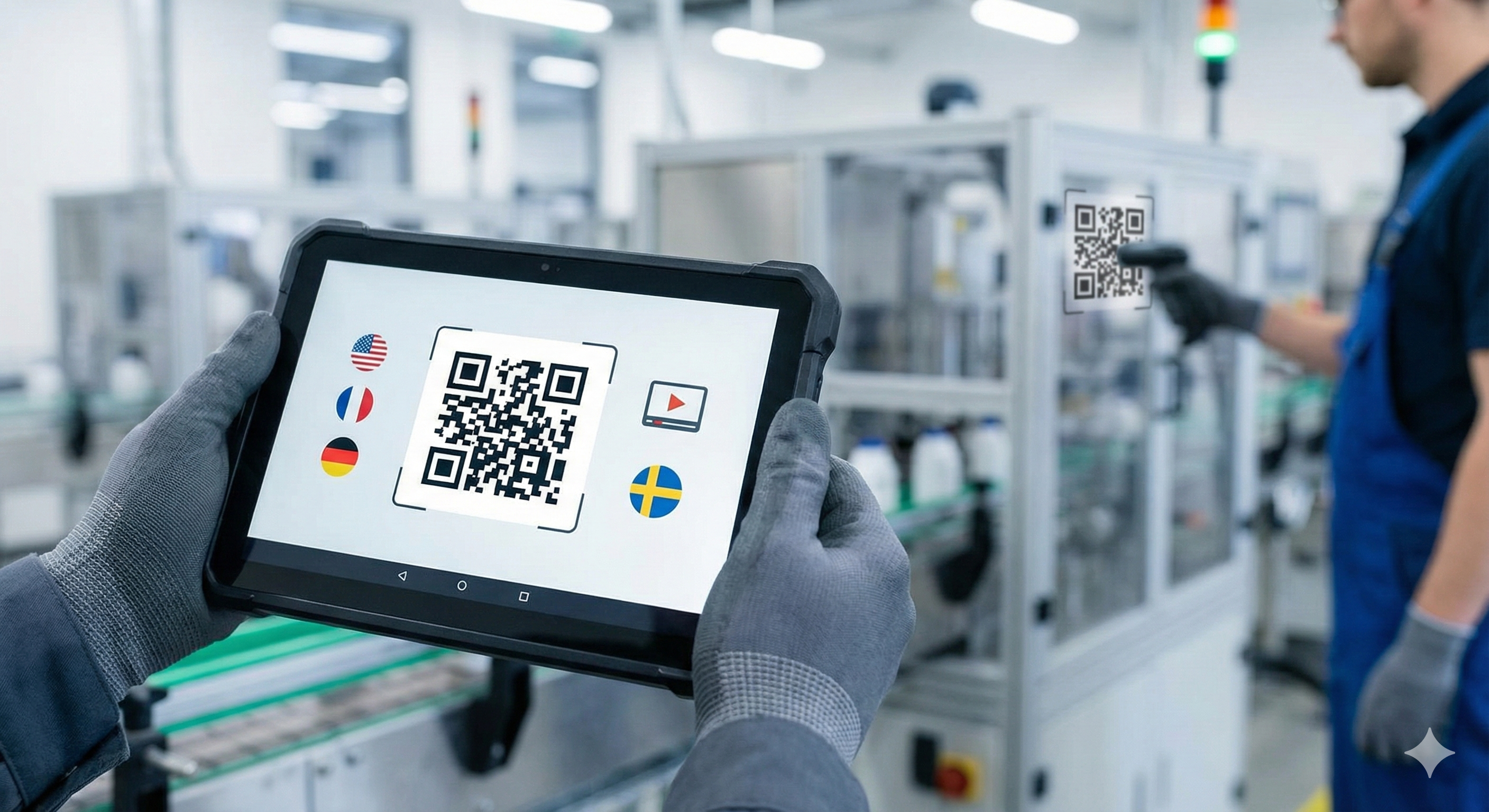
If you search for “QR code apps for instructions”, you will likely find a flood of marketing tools or generic generators. While these might seem like a quick fix, any solution engineer will tell you that on a high-stakes production line, they simply do not scale. A broken link or a static PDF isn’t just an annoyance; it is a stoppage.
A true connected worker platform does not just “link” to a document. It transforms how knowledge is engineered, delivered, and tracked. When safety and quality are on the line, you need a dynamic system that verifies understanding and offers complete transparency on engagement.
This article explores what makes a top-rated connected worker app and why dedicated platforms like Manual.to offer the most transparent value for the shop floor.
Many teams start their digital journey by using simple QR code generators to link to files stored on a SharePoint or Drive. From an engineering perspective, this architecture is fragile. It creates “link rot” – if a file is moved or renamed, the code on the machine becomes useless.
Top-rated connected worker apps solve this through dynamic resolution. With a platform like Manual.to, the QR code is a permanent gateway. You can change the underlying procedure, update the video, or add a new safety check without ever needing to reprint the physical label. This ensures that the “latest version” is not just a file name, but a reality on the shop floor.
The most common failure point for industrial software is user friction. If an operator needs a username, a password, and three clicks to find a guide, they will simply ask a colleague instead. This defeats the purpose of digitisation.
The superior approach is frictionless access. A top-rated app allows operators to scan and view instantly. This requires a sophisticated backend that handles security and permissions without burdening the end-user with login screens for every single interaction. This speed is why Manual.to achieves such high engagement rates compared to traditional LMS or MES modules.
One of the biggest complaints in the industry regarding “Connected Worker” software is the hidden cost of implementation. Legacy systems often require months of consultancy, heavy integration fees, and expensive hardware upgrades before a single instruction is viewed.
Modern solution engineering favours Time-to-Value. A transparent platform is one that you can deploy today. With Manual.to, the pricing reflects the value of the platform, not the hours billed by integrators. You save on printing, translation, and downtime from day one. There are no hidden modules or complex hardware requirements: just a web-based, mobile-first solution that works on the devices you already have.
When engineering your connected worker strategy, ensure your platform ticks these boxes:
The app must handle instant translation. Manual.to allows one master version to be served in any language automatically.
Text is slow; video is fast. The platform must be optimised to stream bite-sized video content reliably, even on 4G.
A QR code should be a two-way communication channel, allowing operators to flag issues or suggest improvements instantly.
While you can cobble together a solution using drives and free generators, a dedicated platform offers the robustness required for industry.
| Feature | Generic Toolset | Manual.to Platform |
|---|---|---|
| Reliability | High risk of broken links | Permanent, dynamic access |
| User Experience | Static PDF / Zooming required | Mobile-optimised / Video |
| Value | Hidden maintenance costs | Immediate ROI & Speed |
Users rate apps based on speed and simplicity. Top-rated apps like Manual.to are defined by how quickly an operator can solve a problem, usually within minutes of scanning a QR code and without navigating complex menus.
Unlike MES systems that often charge per module or require heavy customisation fees, Manual.to operates on a clear SaaS model. The value is visible immediately through reduced training time and printing costs, with no hidden implementation fees.
Yes. As a web-based solution, Manual.to is device-agnostic. It works seamlessly on any device with a camera and a browser, meaning you do not need to buy proprietary hardware to get started.
Choosing the right tool is about more than just generating a code; it is about engineering a better way to work. By selecting a dedicated connected worker platform, you ensure that your instructions are always accessible, effective, and up to date.
Stop relying on static tools for a dynamic environment. Switch to a solution engineered for the reality of the shop floor.
Manual.to offers the fastest way to bring QR-based instructions to your line. See why companies like Audi and Sioen trust us for their connected worker strategy.

Schedule a demo with our Manual.to specialists