
At Nike's Vietnamese manufacturing facility, Line 7 achieved 91% OEE - the plant's highest ever. Six months later, when the expert operator transferred to another site, OEE dropped to 73%. The measurements were perfect. The knowledge was gone.
8 min read
Overall Equipment Effectiveness (OEE) is a manufacturing metric that measures the percentage of planned production time that actually produces quality output. It identifies lost productive time through three factors: availability (uptime), performance (speed), and quality (defect-free output).
But here's what the textbooks don't tell you: OEE is a measure of equipment performance based on actual availability, performance efficiency, and quality - but sustaining those numbers requires capturing the human expertise behind each factor. You can track OEE perfectly and still watch it collapse when key people leave.
Why Most OEE Implementations Plateau After Initial Success

The math behind OEE is straightforward. OEE is calculated by multiplying machine availability rate, production performance rate, and quality rate. Teams measure these factors, identify bottlenecks, make improvements, and watch OEE climb from 65% to 80%.
Then it stops. Despite continued measurement and tracking, OEE gains level off. The problem isn't the calculation - it's what happens to the knowledge behind the improvements.
Tribal Knowledge Trap
The operator who figured out the optimal changeover sequence for Product A keeps it in their head. When they're absent, changeover time doubles.
Shift Variation
Day shift achieves 92% availability. Night shift struggles at 78%. The difference isn't equipment - it's undocumented procedures.
Training Gaps
New hires receive generic training. The specific techniques that drive performance improvements remain with experienced workers.
Knowledge Exodus
Retiring experts take decades of optimization knowledge. Replacement operators start from scratch, undoing years of OEE gains.
Consider ABB's experience across their European plants. Plant A maintained 89% OEE for three years. Plant B, using identical equipment, averaged 71%. The difference wasn't technology or training programs - it was the preservation of procedural knowledge that drives each OEE factor.
Beyond the Formula: What OEE Actually Measures in Practice
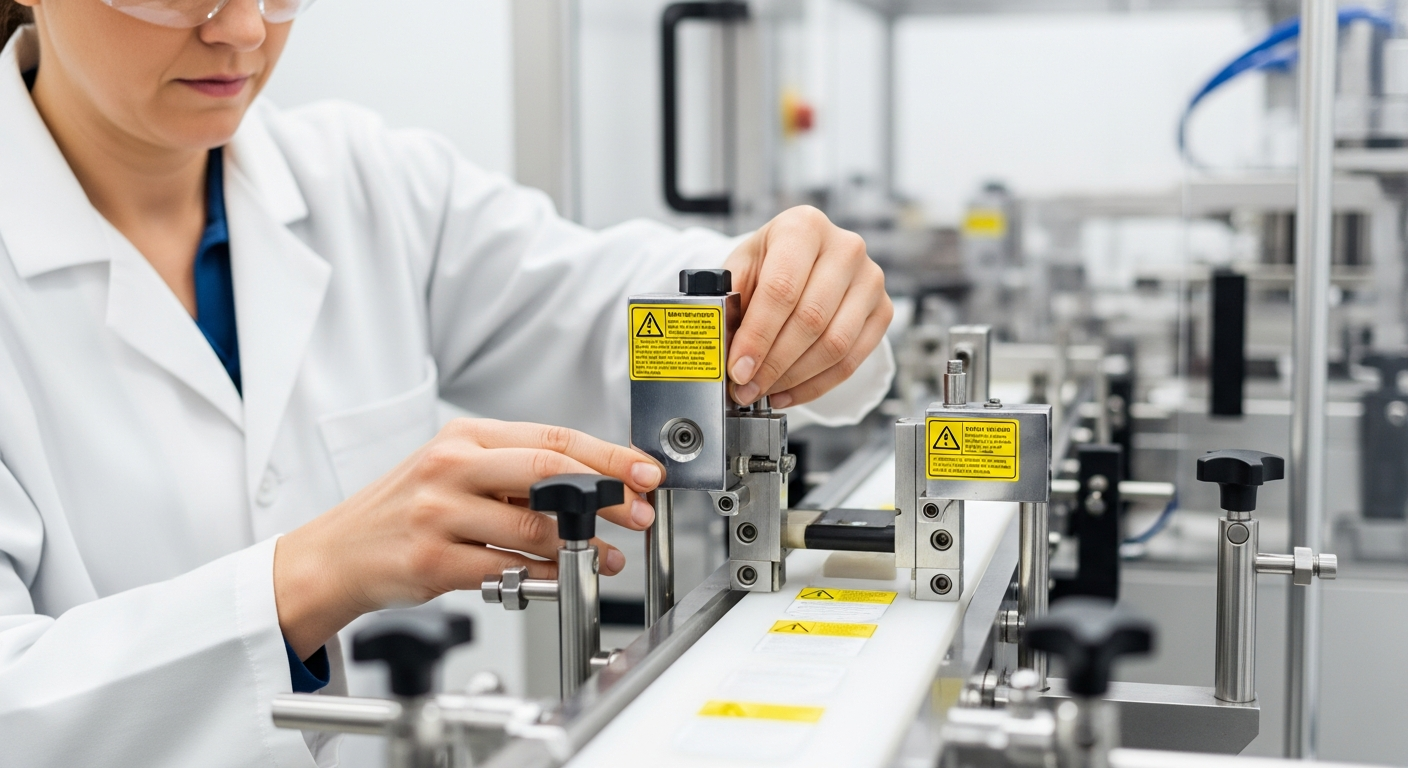
OEE calculates three factors, but each factor represents layers of human decision-making and expertise that measurements alone can't capture.
Availability (Uptime)
Measures downtime from equipment failures and adjustments. Behind this metric: how operators troubleshoot minor issues, when they escalate problems, optimal maintenance sequences, and prevention techniques that avoid unplanned stops.
Performance (Speed)
Measures operating speed relative to design capacity. Behind this metric: setup procedures that maximize throughput, material handling techniques, workflow optimization, and the subtle adjustments that prevent micro-stops.
Quality (First-Pass Yield)
Measures defect-free output percentage. Behind this metric: inspection techniques, adjustment procedures for quality drift, material verification steps, and the experience-based decisions that prevent rework.
At P&G's Cincinnati facility, two identical packaging lines showed different OEE patterns. Line 1 maintained consistent 87% OEE across all shifts. Line 2 varied from 91% (day shift) to 74% (night shift). The equipment was identical. The difference was documented versus undocumented expertise.
The Hidden Knowledge Layer Behind High-Performance OEE
Companies sustaining top-performing OEE (85%+) share one characteristic: they've systematically captured the procedural knowledge that drives their three factors.
What Most OEE Guides Get Wrong About Sustainability
Traditional OEE implementation focuses on measurement tools and dashboards. But measurement without knowledge preservation creates a productivity mirage - numbers that look good until key people leave.
True OEE sustainability requires treating each factor as a knowledge system. The companies maintaining 85%+ OEE don't just track availability, performance, and quality - they document the specific procedures that achieve those numbers.
This means capturing:
- Setup procedures: The exact sequence that minimizes changeover time for each product combination
- Troubleshooting workflows: Decision trees for common issues that prevent escalation delays
- Quality verification steps: Inspection techniques that catch defects before they multiply
- Preventive interventions: Early warning signs and response procedures
At Nike's Vietnam facility, the operator who achieved 91% OEE had developed a specific warm-up sequence for their injection molding line. This sequence, performed during the first 15 minutes of each shift, prevented the thermal variations that caused quality issues. When documented and shared across shifts, all operators achieved similar results.
| OEE Factor | Common Measurement | Hidden Knowledge | Capture Method |
|---|---|---|---|
| Availability | Uptime percentage | Troubleshooting sequences | Video of expert diagnosis |
| Performance | Speed vs. target | Setup optimization | Changeover procedure filming |
| Quality | First-pass yield | Inspection techniques | Quality check documentation |
OEE Implementation Framework: From Measurement to Knowledge System

Sustainable OEE implementation requires building both measurement capability and knowledge preservation systems simultaneously.
Baseline OEE Measurement
Start with accurate data collection. Use the standard calculation: availability × performance × quality to establish current state. Focus on one production line or critical equipment piece initially.
Identify Knowledge Gaps
Map which procedures exist only in expert heads. Look for performance variations between shifts, operators, or product runs that can't be explained by equipment differences.
Capture Critical Procedures
Document the specific techniques behind your highest-performing periods. Film changeovers, troubleshooting sequences, and quality procedures. Tools like Manual.to can convert videos into step-by-step guides in 60 seconds.
Deploy Point-of-Need Access
Make procedures accessible where work happens. QR codes on equipment, mobile-friendly guides, and multilingual support ensure knowledge reaches all operators when needed.
Measure Knowledge Impact
Track OEE improvements alongside knowledge usage. Monitor which procedures are accessed most, completion rates, and correlation between guide usage and performance metrics.
This approach isn't just about documentation - it's about building a system where OEE improvements become reproducible and transferable rather than dependent on individual expertise.
Maintaining OEE Gains Through Workforce Changes
The true test of OEE implementation comes during workforce transitions. Companies that maintain performance through retirements, transfers, and new hires have solved the knowledge retention challenge.
Consider the automotive industry's experience. When Toyota implemented standard work procedures combined with OEE tracking, they achieved consistent performance across multiple shifts and plant locations. The key was capturing not just what to do, but how expert operators knew when to deviate from standard procedures.
This requires:
- Succession planning for critical roles: Identify operators whose departure would impact OEE and prioritize knowledge capture
- Cross-training with documented procedures: Use visual guides to train operators on equipment they don't typically run
- Onboarding acceleration: New hires can achieve target OEE faster with access to expert procedures
- Multilingual accessibility: Procedures available in workers' native languages reduce training time and error rates
The limitation of this approach becomes apparent with highly complex troubleshooting scenarios. While standard procedures capture 80% of operational knowledge, unusual equipment failures or quality issues still require expert intervention and can't be fully documented in advance.
Common OEE Implementation Failures and Prevention
Learning from failed implementations reveals patterns that successful companies avoid.
Measurement Without Action
Tracking OEE but not addressing root causes. Prevention: Link each OEE factor to specific improvement procedures and track implementation.
Generic Benchmarking
Comparing OEE across different equipment types or product lines. Prevention: Set targets based on theoretical maximum for specific equipment and processes.
Data Quality Issues
Inaccurate timing or classification of downtime events. Prevention: Train operators on data collection and use automated systems where possible.
Improvement Isolation
Gains limited to single shifts or operators. Prevention: Document successful techniques and ensure knowledge transfer across the entire team.
The most common failure pattern involves treating OEE as a reporting metric rather than an improvement system. Companies that sustain high OEE integrate it with kaizen methodology, poka yoke error prevention, and continuous improvement practices.
Success requires connecting OEE measurement to actionable procedures. When gemba walk observations reveal performance variations, the response should be knowledge capture - not just corrective action. This builds a lean manufacturing system that preserves improvements.
What is the difference between measuring OEE and sustaining OEE gains?
How do you maintain OEE improvements when experienced operators leave?
Why do OEE initiatives fail even with correct calculations?
What's a realistic OEE target for manufacturing equipment?
Can OEE work with our process?
How does workforce language diversity affect OEE implementation?
Sources
Transform Your OEE from Measurement to Knowledge System
Start capturing the expertise behind your highest OEE performance.
Try NowBook a Demo