
Transform your manufacturing processes with proven error prevention techniques that go beyond traditional mistake-proofing devices. Without proper poka yoke, things go wrong.
12 min read
At 2:30 AM, a pharmaceutical technician at a Belgian facility skips step 4 of the cleaning procedure. No alarm sounds. No machine stops. The error goes undetected until morning QC testing reveals contamination in 480 units worth €180,000.
This scenario repeats daily across manufacturing facilities worldwide. While traditional poka yoke focuses on preventing physical errors through mechanical devices, the most costly mistakes today stem from knowledge gaps and procedural failures.
Poka-yoke is a Japanese error prevention technique that makes mistakes either impossible to occur or immediately obvious when they do happen. Originally developed by Shigeo Shingo for Toyota's Production System, the term combines "poka" (inadvertent error) with "yoke" (prevention).
The Hidden Cost of Procedure Failures in Manufacturing
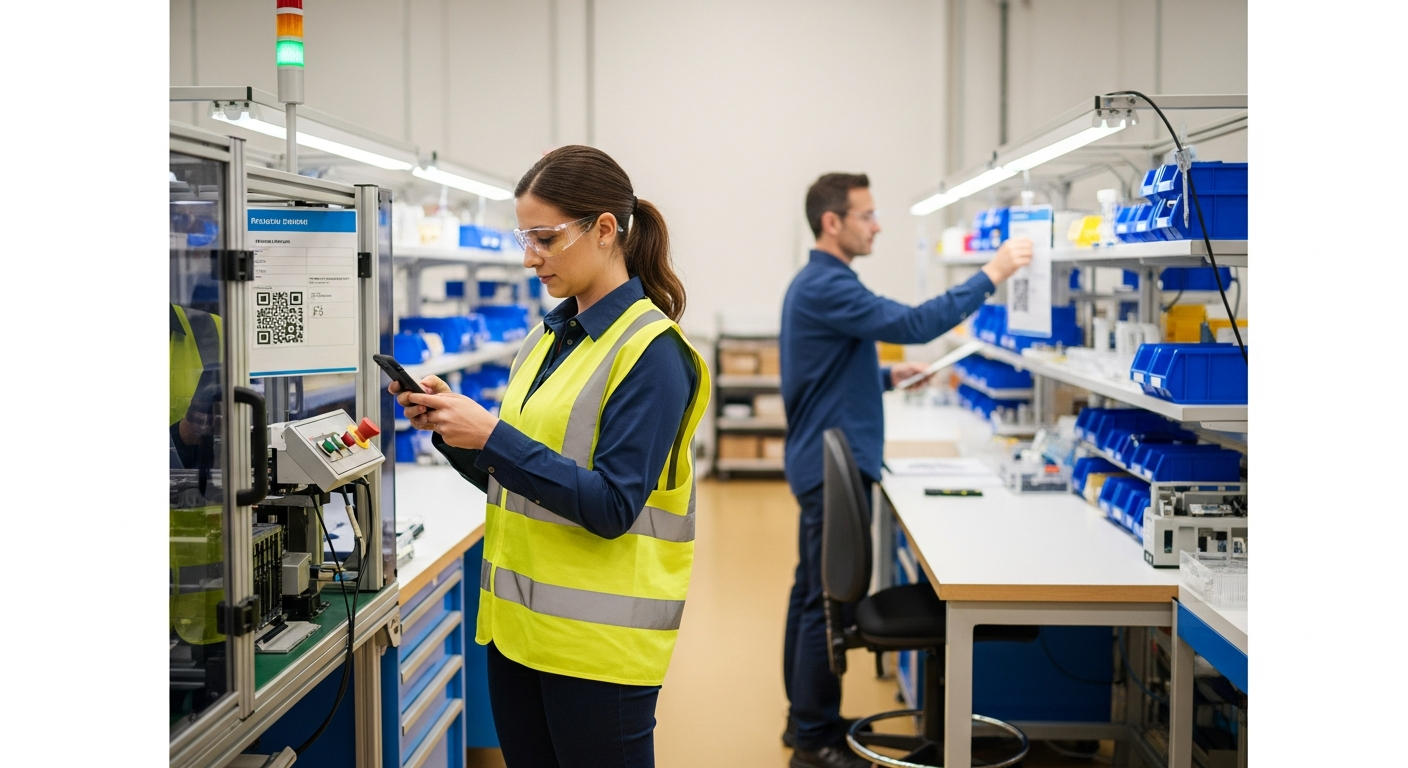
While equipment-based poka yoke devices get attention, systematic implementation of Poka Yoke techniques results in reduction of quality defects and improvement in overall equipment effectiveness. The greater opportunity lies in preventing knowledge-based errors.
Traditional standard operating procedure documentation fails because workers can't access it when they need it most. Paper binders stay in supervisors' offices. SharePoint folders require corporate logins. Digital documents aren't multilingual.
Access Barrier
Workers can't find procedures when they need them. Critical steps get skipped or improvised during shift changes.
Language Gaps
30-50% of EU production workers are non-native speakers. Text-heavy procedures create interpretation errors.
Knowledge Decay
Expert workers retire, taking undocumented variations and troubleshooting insights with them.
Update Lag
Process changes don't reach the shop floor. Workers follow outdated procedures for weeks or months.
This creates what safety experts call "normalization of deviance." Small procedural shortcuts become accepted practice until a serious incident occurs.
Beyond Physical Devices: The Poka Yoke Maturity Model
Most organizations implement poka yoke reactively, adding devices after problems occur. The most effective approach follows a maturity progression from reactive fixes to predictive prevention systems.
Reactive Error Prevention
Traditional mechanical devices that prevent physical mistakes. Car ignition locks, washing machine door sensors, and USB connector shapes exemplify this level.
Procedural Error Prevention
Visual, accessible instructions that prevent knowledge-based errors. QR codes linking to step-by-step guides eliminate the "how do I do this?" pause that leads to mistakes.
Predictive Knowledge Systems
Analytics-driven prevention that identifies error patterns before they cause defects. Completion tracking reveals which procedures consistently cause confusion.
Organizations typically start with Level 1 because physical devices are obvious and measurable. However, product assembly efficiency studies show that procedural improvements often deliver greater ROI than equipment modifications.
Level 1: Reactive Error Prevention (Traditional Poka Yoke)

Physical poka yoke devices remain essential for manufacturing safety and quality. The Lean Enterprise Institute identifies two primary types: shutdown mechanisms and warning systems.
| Device Type | Function | Manufacturing Examples | Effectiveness |
|---|---|---|---|
| Shutdown | Prevents operation until condition is met | Machine won't start with incorrect workpiece orientation | High - forces compliance |
| Warning | Alerts operator to abnormal conditions | Light/buzzer when parts bin is empty | Medium - relies on response |
| Contact | Physical shape prevents incorrect assembly | Connectors with unique geometries | Very High - impossible to bypass |
| Fixed-Value | Predetermined count or measurement | Parts counter with automatic stop | High - eliminates counting errors |
Effective physical poka yoke devices share common characteristics: simplicity, reliability, and low cost. They integrate seamlessly into existing workflows without requiring behavior changes from operators.
However, physical devices address only equipment-related errors. They can't prevent the procedural mistakes that cause the majority of manufacturing quality issues.
Level 2: Procedural Error Prevention (The Missing Link)
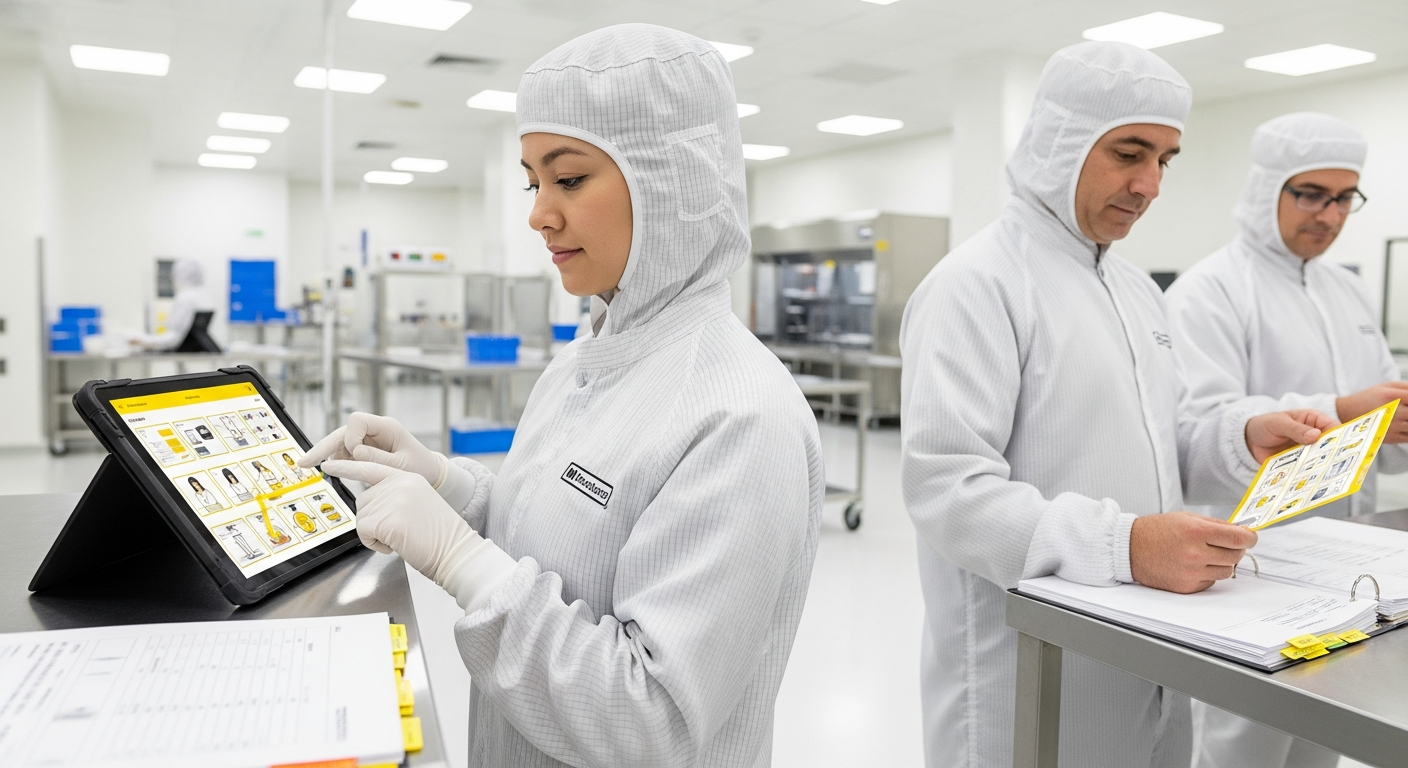
Procedural poka yoke prevents knowledge-based errors through visual, accessible instructions at the point of need. Unlike physical devices that prevent specific mistakes, procedural systems eliminate entire categories of human error.
The most effective procedural poka yoke systems share three characteristics: point-of-need access, visual clarity, and multilingual capability. Manual.to exemplifies this approach by converting video recordings into step-by-step visual guides accessible via QR codes.
Implementation Framework
Successful procedural error prevention follows a structured approach:
Identification: Map critical procedures where errors have the highest impact. Focus on changeover operations, quality control checks, and safety protocols.
Capture: Film expert workers performing procedures correctly. The video becomes source material for creating visual guides that preserve tribal knowledge.
Deploy: Generate QR codes for immediate access. Workers scan the code with their smartphones to view instructions in their preferred language.
Measure: Track completion rates and identify steps where workers consistently struggle or drop off.
What most guides get wrong about procedural poka yoke
Traditional approaches treat procedure documentation as a compliance requirement rather than an error prevention tool.
The most powerful poka yoke devices in modern manufacturing aren't physical. They're procedural. QR-coded visual instructions that prevent knowledge errors before they happen deliver measurable results: knowledge retention improves by 65% compared to text-only documentation.
Level 3: Predictive Knowledge Systems
Advanced poka yoke systems use analytics to prevent errors before they occur. By tracking how workers interact with procedures, organizations identify patterns that predict future mistakes.
Analytics reveal crucial insights: which procedures consistently cause confusion, where workers abandon tasks, and how completion times vary across shifts. This data enables proactive improvements rather than reactive fixes.
Pattern Recognition: Step-level analytics show exactly where procedures break down. If 40% of workers pause for over 2 minutes at step 7, that step needs clearer instructions or additional visual aids.
Predictive Intervention: Completion rate drops often predict quality issues 24-48 hours before they appear in finished goods testing. Early warning systems alert supervisors when procedural compliance falls below threshold levels.
Continuous Improvement: Kaizen principles applied to knowledge systems create self-improving procedures. Worker feedback and usage data drive iterative refinements.
Implementation Framework: From Physical to Digital Poka Yoke
Successful error prevention requires both physical devices and procedural systems. The implementation framework integrates traditional poka yoke with modern digital capabilities.
| Implementation Phase | Focus Area | Tools Required | Timeline |
|---|---|---|---|
| Assessment | Map current error sources | Process audit, defect analysis | 2-4 weeks |
| Physical Poka Yoke | Equipment-based prevention | Sensors, guards, fixtures | 4-8 weeks |
| Procedural Poka Yoke | Knowledge-based prevention | Interactive walkthrough tools, QR codes | 2-3 weeks |
| Analytics Integration | Predictive prevention | Completion tracking, pattern analysis | Ongoing |
The key insight from IoT integration studies is that modern poka yoke systems work best when they combine multiple prevention layers. Physical devices handle equipment errors, procedural systems prevent knowledge gaps, and analytics predict future issues.
Multilingual Considerations
Global manufacturing requires error prevention that works across language barriers. Traditional text-based procedures create interpretation errors when workers aren't native speakers.
Visual poka yoke systems eliminate language barriers by using images, videos, and simple symbols instead of complex written instructions. When text is necessary, AI-powered translation ensures consistent messaging across all languages.
This approach doesn't require workers to learn new languages or companies to hire multilingual supervisors. Instead, it adapts the error prevention system to the workforce rather than forcing workforce adaptation.
Measuring Poka Yoke Effectiveness in the Digital Age
Traditional poka yoke measurement focuses on defect rates and equipment uptime. Modern systems require more sophisticated metrics that capture both physical and knowledge-based improvements.
Leading Indicators: Procedure completion rates predict quality outcomes better than traditional metrics. When completion rates drop below 85%, defect rates typically increase within 24-48 hours.
Knowledge Transfer Metrics: Time-to-competency for new hires measures how effectively poka yoke systems transfer expert knowledge. Upskilling programs see 40-60% improvement when supported by visual procedures.
Multilingual Impact: Error rates in multilingual workforces provide unique insights. Facilities using visual, multilingual procedures report 30-50% fewer interpretation-related mistakes compared to text-only documentation.
ROI Calculation Framework
Measuring poka yoke ROI requires tracking both prevented costs and implementation investments:
Prevented Costs: Defect reduction, rework elimination, and faster training offset implementation expenses. Most organizations achieve payback within 6-12 months through reduced quality costs alone.
Hidden Benefits: Improved worker confidence, reduced supervisor interruptions, and faster problem resolution provide additional value that's harder to quantify but equally important.
Integration with Lean Manufacturing Systems
Poka yoke works best as part of a comprehensive lean manufacturing system. When combined with other lean tools, error prevention becomes self-reinforcing.
5S Integration: Visual workplace organization supports poka yoke by making correct procedures obvious and incorrect ones impossible. Color coding, shadow boards, and standardized layouts all contribute to error prevention.
Standard Work Connection: Standard work procedures provide the foundation for effective poka yoke implementation. Without standardized processes, error prevention devices may mask problems rather than solve them.
Continuous Improvement Cycle: Gemba walks and kaizen events identify new opportunities for both physical and procedural poka yoke implementation. Worker suggestions often reveal simple solutions that engineering teams miss.
The limitation is that poka yoke alone cannot fix systemic process issues. If the underlying process is flawed, error prevention devices may simply move problems to different locations rather than eliminating them.
Is poka-yoke only for manufacturing equipment?
How does digital poka-yoke differ from traditional methods?
Can poka-yoke principles apply to training and procedures?
What's the ROI of implementing procedural poka-yoke?
How do you measure poka-yoke effectiveness?
Is poka-yoke the same as automation?
Is poka-yoke a kaizen technique?
Sources
- International Journal of Creative Research Thoughts, "Implementation Of Poka Yoke Error Prevention Systems", 2025
- International Journal of Mechanical Engineering, "Implementing Poka-Yoke in Manufacturing: IoT Integration Study", 2025
- Preprints.org, "Poka Yoke in Smart Production Systems with Pick to Light Implementation", 2025
- Lean Enterprise Institute, "Poka Yoke Resource Guide", 2026
Transform Your Error Prevention Strategy
See how visual procedures eliminate knowledge-based errors in your facility.
Try NowBook a Demo