
Why accessibility beats documentation quality in manufacturing knowledge management systems.
12 min read
Knowledge management systems fail when critical information is documented but inaccessible during emergencies or shift changes.
In many plants, the procedure that would stop a problem at night already exists and is well documented. It sits in a SharePoint folder behind a corporate login, or in a supervisor's locked office, where the night shift cannot reach it.
Why Do Knowledge Management Systems Fail the 3 AM Test?

The 3 AM test is simple: can your night shift access critical procedures when the expert is at home and the supervisor's office is locked? Most knowledge management implementations fail this test completely.
Traditional knowledge management follows a documentation-first approach. Companies spend months creating comprehensive procedures, then lock them behind corporate logins, SharePoint permissions, or physical binders. This creates what we call "perfect documentation, impossible access."
The SharePoint Graveyard
Documents buried in folder structures that require corporate logins. Night shift workers often lack access credentials.
The Expert Bottleneck
Critical knowledge locked in the heads of senior operators who aren't available during emergencies or different shifts.
The Language Barrier
Procedures written in one language for multilingual production teams. Translation happens manually, if at all.
The Update Lag
Static documents that become outdated as processes change. No systematic review or update mechanism.
The result: when emergencies strike, workers improvise, delay, or make costly errors.
The True Cost of Inaccessible Knowledge in Manufacturing
Manufacturing knowledge loss costs extend far beyond the obvious.
Knowledge gaps weigh more in regulated industries. Pharmaceutical companies face additional FDA compliance risks when knowledge gaps lead to deviation reports.
The hidden cost is opportunity loss. When teams can't access expertise quickly, they default to conservative approaches that limit throughput. A PMC study on knowledge sharing in manufacturing found that organizations struggle to process and interpret disconnected, unstructured technical information, leading to underutilized operational knowledge.
Beyond Documentation: The Knowledge Management Maturity Model
Knowledge management maturity isn't measured by documentation volume but by access speed during critical moments. Most organizations get stuck at Level 1 or 2, never reaching true operational effectiveness.
Level 1: Perfect Documentation, Impossible Access
Comprehensive procedures locked in SharePoint folders, binders, or expert heads. Documentation exists but requires corporate login, physical presence, or specific person availability. Fails the 3 AM test completely.
Level 2: Digital Knowledge, Same Access Problems
Digitized procedures in learning management systems or document repositories. Still requires corporate access, complex navigation, or language compatibility. Better than paper but still fails emergency access requirements.
Level 3: Point-of-Need Knowledge Systems
QR codes on machines, multilingual instant access, no login required. Workers scan and get procedures immediately. This is where Manual.to enables manufacturing teams to capture video procedures and deploy them instantly via QR codes.
Level 4: Self-Updating Knowledge Networks
AI-powered capture from video, automatic updates, crowd-sourced improvements. Knowledge evolves with the process. Workers contribute improvements through usage feedback and video updates.
The maturity progression requires a fundamental shift in thinking. Instead of asking "How do we document everything?" the question becomes "How do we make expertise accessible when it's needed most?"
Level 1: Perfect Documentation, Impossible Access
Most knowledge management initiatives start with ambitious documentation projects. Teams spend months creating comprehensive standard operating procedures, safety manuals, and troubleshooting guides. The documentation is thorough, professionally formatted, and technically accurate.
The fatal flaw: access friction. These systems optimize for completeness over usability, creating barriers precisely when knowledge is needed most urgently.
Common Level 1 characteristics include corporate login requirements that exclude contractors and temporary workers, complex folder structures that require training to navigate, single-language documentation for multilingual teams, and paper backups stored in locked supervisory offices.
These systems work fine during normal business hours with full staffing. They collapse during emergencies, shift changes, or when key personnel are unavailable. The documentation quality is irrelevant if workers can't access it when problems occur.
Level 2: Digital Knowledge, Same Access Problems
Recognizing access limitations, many organizations digitize their knowledge management. They migrate from paper binders to SharePoint sites, implement learning management systems, or deploy specialized documentation platforms.
Digitization solves storage and search problems but rarely addresses access friction. The same barriers persist: corporate authentication requirements, complex navigation, and language limitations. Workers still can't get procedures quickly during emergencies.
What most knowledge management systems get wrong about emergency access
Traditional KM focuses on organizing information for planned retrieval, not emergency access. This creates systems that work perfectly during training sessions but fail catastrophically during actual incidents.
Real manufacturing emergencies don't wait for login screens or folder navigation. The best knowledge system is the one that gets workers to the right information in under 10 seconds, not the one with the most comprehensive documentation structure.
Level 2 systems often introduce additional complexity through feature bloat. Learning management systems designed for corporate training include modules, assessments, and progress tracking that create barriers during urgent situations. Workers need immediate answers, not learning pathways.
The improvement over Level 1 is marginal during critical moments. While digital systems offer better search capabilities and don't get locked in physical offices, they maintain the fundamental access friction that prevents effective emergency response.
Level 3: Point-of-Need Knowledge Systems
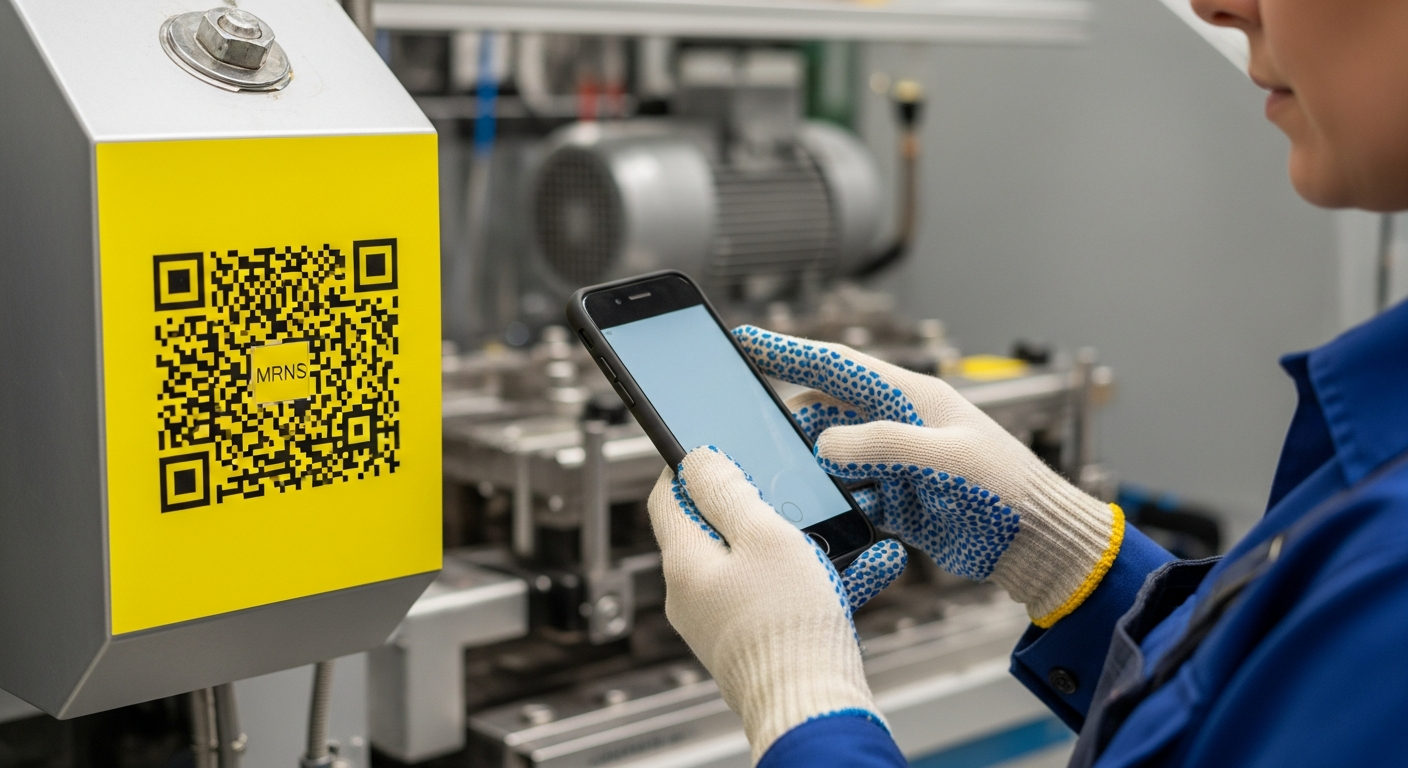
Level 3 represents a fundamental paradigm shift from documentation management to knowledge access. Instead of perfecting the storage system, Level 3 optimizes for retrieval speed and eliminates access barriers.
The breakthrough innovation is contextual access through QR codes, NFC tags, or location-based triggers. Workers access knowledge at the exact point and moment of need without authentication, navigation, or language barriers.
Key characteristics include instant access via smartphone scanning, automatic language detection and translation, no corporate login or app download requirements, and point-of-need placement on machines, workstations, or safety equipment.
This approach works because it meets workers where they are, both physically and technologically. Everyone has a smartphone, everyone knows how to scan QR codes, and everyone expects instant access to information. Level 3 systems leverage these existing behaviors instead of requiring new ones.
Implementation requires rethinking knowledge creation workflows. Instead of lengthy documentation projects, teams focus on capturing expertise through quick video recordings that can be processed into step-by-step guides within minutes.
Level 4: Self-Updating Knowledge Networks
Level 4 knowledge management systems become living, evolving resources that improve through use. They combine AI-powered content creation with crowd-sourced improvements and automated updates based on process changes.
The foundation is video-based knowledge capture. Instead of asking experts to write procedures, organizations film them performing tasks and use AI to generate step-by-step guides automatically. This captures not just what to do but how to do it, including subtle techniques and problem-solving approaches.
Continuous improvement happens through usage analytics and worker feedback. Systems track which procedures are most accessed, where workers get stuck, and which steps cause confusion. This data drives content optimization and identifies knowledge gaps.
Advanced Level 4 capabilities include automatic translation updates when source content changes, integration with gemba walk observations for process improvement, and predictive content recommendations based on equipment status or production schedules.
The self-updating aspect addresses the chronic problem of outdated documentation. When processes change, the knowledge system evolves automatically through AI analysis of new video captures and worker interactions.
Level 4 systems don't replace human expertise but amplify it. They make expert knowledge accessible to everyone while preserving the nuanced understanding that comes from experience.
Building Knowledge Management That Survives Workforce Changes

Manufacturing faces an unprecedented workforce transition. As experienced workers retire, organizations must capture institutional knowledge before it walks out the door. Traditional documentation approaches are too slow and incomplete for this challenge.
Effective knowledge retention starts with identifying critical expertise before it's needed. Map your workforce by skill criticality and retirement risk. Focus capture efforts on high-impact, high-risk knowledge first.
| Knowledge Type | Capture Method | Access Method | Update Frequency |
|---|---|---|---|
| Safety Procedures | Video filming + AI processing | QR codes at risk points | Annual review |
| Equipment Troubleshooting | Problem-solution video pairs | Equipment-mounted tags | As issues arise |
| Quality Control | Inspection technique videos | Workstation access points | Process change triggers |
| Changeover Procedures | Complete changeover recording | Production line displays | Product mix updates |
The video-first approach captures tacit knowledge that written procedures miss. When experts demonstrate techniques, they reveal problem-solving approaches, quality indicators, and troubleshooting instincts that are impossible to document in text.
Knowledge transfer works best when integrated into normal operations. Instead of special documentation sessions, capture expertise during routine work. Film changeovers, maintenance procedures, and quality checks as they happen naturally.
This approach doesn't eliminate the need for comprehensive technical documentation. Complex troubleshooting trees, regulatory requirements, and detailed specifications still require written formats. But for operational knowledge that keeps production running, video capture provides far superior knowledge transfer.
Succession planning becomes proactive rather than reactive. When senior workers know their expertise is being preserved and shared, they're more likely to participate in knowledge capture activities. This creates a positive cycle of knowledge sharing that benefits everyone.
Implementation requires balancing comprehensive capture with practical accessibility. Not every task needs documentation, but every critical process should have instant-access guidance available when problems occur.
Common Knowledge Management Mistakes Manufacturing Teams Make
Even well-intentioned knowledge management initiatives fail when they repeat common implementation mistakes. Understanding these pitfalls helps organizations avoid wasting resources on systems that ultimately don't improve operational effectiveness.
Documentation for Documentation's Sake
Creating comprehensive procedures without considering who will use them, when, or how. Fix: Start with specific use cases and work backwards to content requirements.
Technology-First Thinking
Selecting software platforms before understanding access patterns and user needs. Fix: Map current knowledge-seeking behaviors before choosing tools.
Perfect Documentation Paralysis
Delaying deployment until procedures are comprehensive and error-free. Fix: Deploy minimum viable knowledge and improve through use.
Single-Language Bias
Creating documentation in management languages rather than worker languages. Fix: Prioritize frontline language needs and use AI translation for coverage.
The biggest mistake is optimizing for creation rather than consumption. Most knowledge management projects focus on how to capture and organize information efficiently. This misses the fundamental point: knowledge systems succeed based on how well they serve workers who need answers quickly.
Another critical error is assuming workers will change their information-seeking behaviors. People don't abandon familiar patterns because a new system launches. Successful knowledge management works with existing habits rather than against them.
Finally, organizations often underestimate the maintenance burden of comprehensive documentation. Static documents decay rapidly in dynamic manufacturing environments. Knowledge systems must be designed for continuous updating or they become liability rather than assets.
What is knowledge management in manufacturing?
How do you measure knowledge management success?
What causes knowledge management systems to fail?
How can manufacturers prevent knowledge loss?
What's the difference between documentation and knowledge management?
Why do workers ignore existing procedures?
How does AI improve knowledge management?
What knowledge should be captured first?
Start Building Knowledge Management That Actually Works
Stop losing expertise when workers leave and procedures can't be found.
Try NowBook a Demo