
Most Gemba walks identify problems but fail to preserve the solutions. Learn how to transform floor observations into lasting knowledge systems that prevent expertise loss.
9 min read
At 2:15 AM, ArcelorMittal's Luxembourg steel plant lost €280,000 in production when the night shift couldn't locate the emergency cooling procedure. The day shift supervisor who knew it by heart was home sleeping. The Gemba walk conducted three months earlier had identified this exact knowledge gap, but nothing was documented.
This scenario plays out across manufacturing facilities worldwide. Traditional Gemba walks excel at spotting inefficiencies, but they fail at the most critical task: capturing and preserving the expertise needed to solve those problems permanently.
A Gemba walk is a lean management practice where leaders observe work processes at their actual location to identify improvements and capture undocumented knowledge. Unlike traditional audits or reviews, Gemba walks focus on understanding value streams and their problems through direct observation rather than reviewing reports.
Why Most Gemba Walk Insights Never Become Lasting Improvements

Most Gemba walks follow a predictable pattern: observe, discuss, document in PowerPoint, file away. Six months later, the same problems resurface because the solutions were never properly captured or deployed.
Observation Without Documentation
Leaders identify process variations but fail to document the correct method in a format workers can actually access. The knowledge remains trapped in meeting notes.
Expert Knowledge Dependency
Solutions require the presence of specific experts who won't be there forever. When they retire or transfer, the knowledge disappears with them.
Language and Access Barriers
Improvements are documented in management language and stored in systems that frontline workers cannot easily access during their shifts.
No Feedback Loop
There's no mechanism to verify whether identified improvements were actually implemented or whether they solved the underlying problems.
Research from healthcare Gemba walk studies shows that systematic follow-through with proper documentation and access systems is critical for lasting improvements.
The Gemba Walk Maturity Model: From Observation to Knowledge Capture
Most organizations approach Gemba walks as reactive problem-hunting expeditions. Mature manufacturers use them as proactive knowledge preservation systems that prevent crises before they occur.
| Level | Focus | Outcome | Knowledge Impact |
|---|---|---|---|
| Level 1: Reactive | Problem identification | Issue lists and action items | Knowledge gaps identified but not filled |
| Level 2: Proactive | Process mapping and standardization | Updated procedures and training | Best practices documented and shared |
| Level 3: Predictive | Knowledge preservation and transfer | Visual work instructions and accessible guides | Expert knowledge captured before it's lost |
Level 3 organizations understand that Gemba walks are knowledge capture events. They use the observation time to film expert problem-solving methods, document tribal knowledge, and create accessible instruction systems that survive personnel changes.
Level 1: Reactive Walks (Problem Hunting)
Reactive Gemba walks respond to existing problems: quality issues, safety incidents, or production bottlenecks. Leaders walk the floor to understand what went wrong and identify immediate fixes.
Typical process: Gather team, walk problem area, discuss observations, create action plan, assign owners, schedule follow-up meeting.
Documentation output: PowerPoint presentations, Excel spreadsheets, email action items stored in shared drives that workers cannot access from the production floor.
Knowledge impact: Problems get temporarily fixed, but the underlying knowledge gaps remain. The same issues resurface when key people are absent or when similar situations arise elsewhere in the facility.
Level 2: Proactive Walks (Process Mapping)
Proactive Gemba walks focus on understanding and standardizing processes before problems occur. Leaders observe normal operations to identify variations and document best practices.
Systematic approach: Schedule regular walks, follow value streams end-to-end, map current state processes, identify improvement opportunities, update standard operating procedures.
Documentation evolution: Move beyond meeting notes to structured process documentation, visual management boards, and updated training materials.
Knowledge advancement: Best practices get documented and shared across shifts and departments. Process variations are standardized based on optimal performance.
However, Level 2 walks still suffer from accessibility problems. Updated SOPs often remain in corporate systems that production workers cannot easily access when they need guidance in real-time.
Level 3: Predictive Walks (Knowledge Preservation)

Predictive Gemba walks proactively capture expert knowledge before it becomes unavailable. These walks focus on preserving tribal knowledge in formats that frontline workers can access instantly.
Knowledge-first methodology: Identify knowledge holders at risk, film expert problem-solving methods during normal operations, create visual work instructions accessible via QR codes, implement knowledge retention systems.
Pre-Walk Knowledge Audit
Identify which processes depend on specific experts and assess knowledge transfer urgency based on retirement plans, transfer schedules, and skills scarcity.
Real-Time Capture
Film experts demonstrating procedures during actual operations. Document not just the standard process, but also how they handle variations and troubleshoot problems.
Instant Access Deployment
Create QR codes linking to step-by-step visual guides. Place them directly on equipment, workstations, and safety stations where workers need information.
Continuous Validation
Track which guides get used, identify gaps through analytics, and update content based on actual usage patterns and worker feedback.
The Complete Gemba Walk Implementation Framework
Effective knowledge-capture Gemba walks require structured preparation, disciplined execution, and systematic follow-through that goes beyond traditional observation methods.
Pre-Walk Preparation
Objective Setting: Define specific knowledge preservation goals, not just problem identification. Focus on processes that depend on retiring experts or have high variation between operators.
Route Planning: Follow complete value streams, but prioritize areas with known knowledge dependencies. Schedule walks when expert operators are working, not during standard shifts.
Team Assembly: Include the expert operator, a documentation specialist, and someone who can film procedures. Avoid large groups that disrupt normal operations.
During the Walk
Observation Protocol: Watch normal operations first, then ask experts to demonstrate problem-solving scenarios. Film both standard procedures and troubleshooting methods.
Real-Time Documentation: Capture processes as they happen using smartphones or tablets. Tools like Manual.to can convert filmed procedures into step-by-step guides in under 60 seconds.
Expert Engagement: Ask experts to narrate their decision-making process. What visual cues do they use? What variations indicate potential problems? How do they prioritize multiple issues?
What Most Gemba Walk Guides Get Wrong About Documentation
Traditional guides treat documentation as a post-walk activity, missing the opportunity for real-time knowledge capture that prevents expertise loss.
The most valuable Gemba walks are those that capture undocumented expertise in visual, accessible formats during the observation process. While competitors focus on identifying waste, the real opportunity lies in preserving solutions before experts retire or transfer.
Post-Walk Knowledge Deployment
Immediate Processing: Convert filmed procedures into accessible guides within 24 hours while observations are fresh. Use AI-powered tools to accelerate the creation process.
Access System Setup: Generate QR codes for each procedure and place them at relevant workstations. Ensure guides are mobile-friendly and work without app downloads.
Multilingual Adaptation: Translate guides into languages spoken by your workforce. Modern AI translation maintains technical accuracy while adapting to local terminology.
Digital Tools That Make Gemba Discoveries Stick
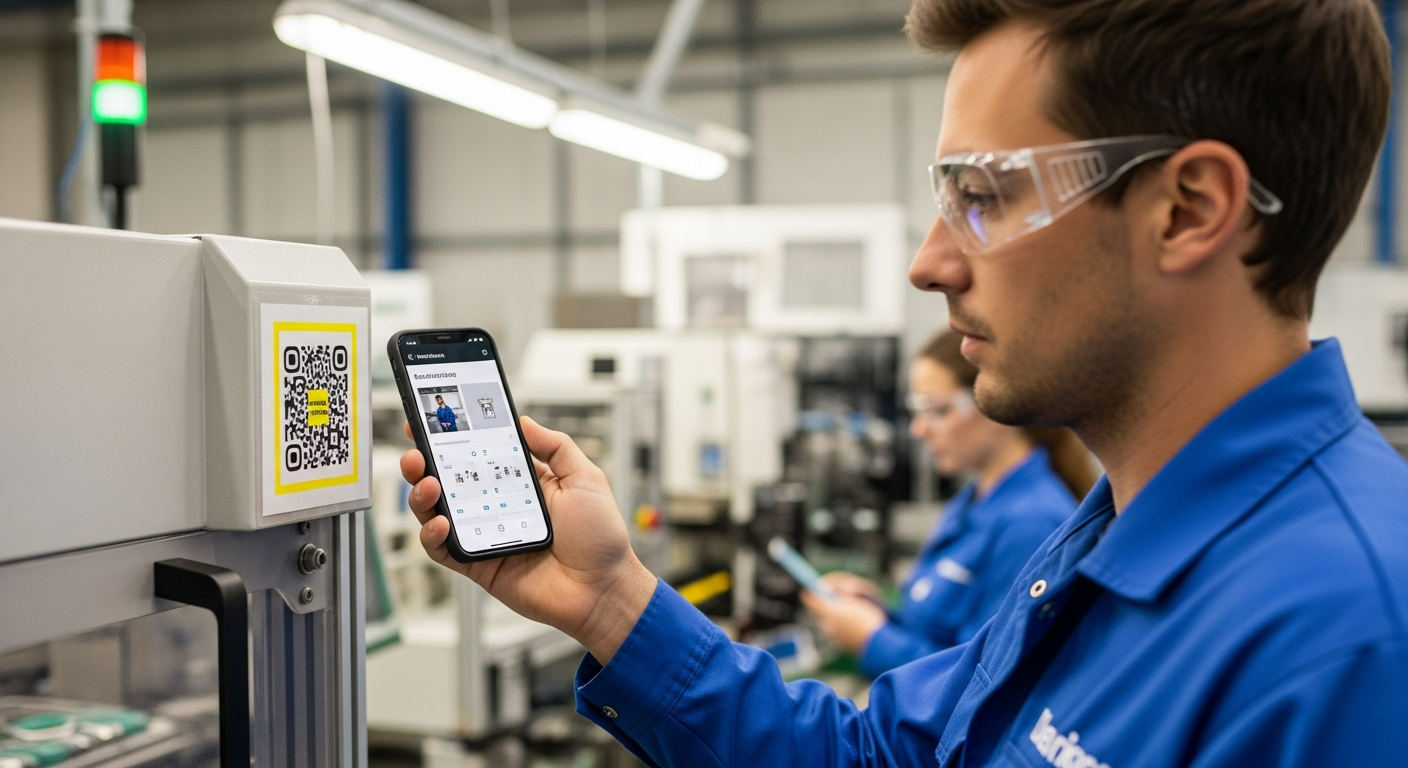
The gap between observation and implementation exists because traditional documentation methods cannot keep pace with operational reality. Digital tools designed for manufacturing environments change this dynamic.
Video-to-Guide Conversion: Modern platforms can analyze filmed procedures and automatically create step-by-step visual instructions. This reduces documentation time from hours to minutes.
Point-of-Need Access: QR codes placed on equipment provide instant access to relevant procedures. Workers scan and get instructions in their preferred language without leaving their workstation.
Usage Analytics: Track which procedures get accessed most frequently, identify knowledge gaps through low-usage patterns, and update content based on real worker behavior.
However, digital tools are only effective when integrated into broader lean manufacturing systems that support continuous improvement and kaizen activities.
Measuring Gemba Walk ROI Beyond Problem Identification
Traditional Gemba walk metrics focus on problems identified and action items completed. Knowledge-preservation metrics track long-term capability building and expertise retention.
| Metric Category | Traditional Measure | Knowledge-Preservation Measure |
|---|---|---|
| Documentation | Action items created | Expert procedures captured and deployed |
| Access | SOPs updated | QR code scans and guide usage |
| Knowledge Transfer | Training hours delivered | New operators achieving expert-level performance |
| Sustainability | Problems resolved | Knowledge preserved beyond expert departure |
Manufacturing leaders should track knowledge-preservation ROI through reduced onboarding time, decreased dependency on specific individuals, and maintained performance levels during personnel transitions.
Research from lean leadership studies indicates that effective Gemba walk leaders approach these activities with care, recognition, engagement, and a focus on relationships and communication.
Implementation Challenges and Solutions
Knowledge-preservation Gemba walks face unique challenges that traditional problem-hunting walks don't encounter. Understanding these obstacles helps organizations prepare effective solutions.
Expert Resistance: Experienced workers may worry that documenting their knowledge makes them replaceable. Address this by positioning them as trainers and continuous improvement leaders, not just operators.
Documentation Bottlenecks: Traditional documentation methods cannot keep pace with operational discoveries. Implement AI-powered tools that reduce documentation time from hours to minutes.
Access Infrastructure: Many facilities lack the digital infrastructure for point-of-need access to procedures. Start with QR codes that work on personal smartphones before investing in dedicated hardware.
This approach doesn't solve every operational challenge. Complex troubleshooting scenarios still require experienced judgment that cannot be fully captured in step-by-step guides. For those situations, focus on documenting decision frameworks rather than specific procedures.
Language Barriers: Multilingual workforces complicate knowledge transfer. Modern translation tools can adapt technical procedures into multiple languages while maintaining accuracy and preserving safety-critical information.
Sustaining Momentum: Initial enthusiasm for documentation often fades. Build knowledge capture into regular quality control processes and poka yoke error prevention systems.
How long should a Gemba walk take to capture actionable knowledge?
What's the difference between a Gemba walk and a safety audit?
How do you conduct effective Gemba walks with multilingual teams?
What digital tools enhance knowledge capture during Gemba walks?
How do you measure the long-term impact of Gemba walk improvements?
Can Gemba walks be conducted virtually for remote operations?
Sources
Transform Your Gemba Walks Into Knowledge Preservation Systems
Capture expert procedures in 60 seconds and deploy them instantly across your operations.
Try NowBook a Demo