Most knowledge sharing systems fail at 3 AM when your best operator isn't there. Here's how to build expertise preservation that actually works during operational crises.
12 min read
At 2:47 AM, the chemical alarm screams at Orange's telecom facility in France. The fiber optic repair procedure exists, perfectly documented in the knowledge sharing system. Location: SharePoint folder requiring VPN access that the night technician doesn't have. €180,000 network outage follows.
Knowledge sharing in manufacturing is the systematic capture and point-of-need delivery of operational expertise to prevent critical knowledge loss during workforce transitions. It differs fundamentally from traditional knowledge management by prioritizing accessibility over documentation quality.
The crisis at Orange reveals why 73% of knowledge sharing initiatives fail in operational environments. The problem isn't getting experts to document what they know. It's making that knowledge accessible in 10 seconds when someone needs it at 3 AM.
Why do 70% of knowledge sharing systems fail during operational crises?

Knowledge sharing systems fail during emergencies because they solve the wrong problem. Most focus on encouraging documentation rather than ensuring accessibility.
The Documentation Trap
Perfect SOPs locked in systems nobody can access. Night shift workers lack VPN credentials. Mobile access requires three logins.
Expert Dependency
Critical knowledge lives in one person's head. When they're unavailable, operations stop. No backup exists for specialized troubleshooting.
Language Barriers
Procedures exist only in the plant's primary language. Multilingual workforce can't access expertise during emergencies. Translation delays cost hours.
Context Loss
Written procedures miss the nuance of physical workflows. Critical decision points aren't captured. Workers guess at ambiguous steps.
CEVA Logistics discovered this during a warehouse automation project. Their best picker had 15 years of optimization knowledge for high-velocity SKUs. When he took vacation, pick rates dropped 23%. The knowledge existed in training manuals, but accessing it during peak hours was impossible.
What is knowledge sharing in manufacturing reality?
Manufacturing knowledge sharing captures and preserves the physical expertise that drives production efficiency. This includes troubleshooting sequences, quality checks, changeover procedures, and safety protocols that experienced operators perform instinctively.
Operational knowledge sharing differs from traditional knowledge management in three critical ways. First, it focuses on physical workflows rather than conceptual information. Second, it prioritizes immediate accessibility over comprehensive documentation. Third, it preserves decision-making context, not just procedural steps.
| Traditional Knowledge Management | Operational Knowledge Sharing | Impact |
|---|---|---|
| Document-based | Visual workflow capture | 85% better comprehension |
| Centralized systems | Point-of-need access | 12x faster retrieval |
| Single language | Multilingual by default | 100% workforce inclusion |
| Perfect documentation | Good-enough accessibility | 90% usage increase |
NHS discovered this distinction when implementing patient care protocols across multilingual nursing staff. Traditional standard operating procedure documents sat unused in filing cabinets. Visual, multilingual guides accessed via QR codes achieved 94% compliance within two weeks.
The four stages of operational knowledge sharing maturity
Most manufacturing operations progress through four distinct knowledge sharing maturity stages. Each stage addresses different operational crises and requires specific technological approaches.
Expert-Dependent Operations
All critical knowledge resides with individual experts. Operations halt when key personnel are unavailable. No systematic knowledge capture exists. Crisis resolution depends entirely on finding the right person.
Documented Knowledge Systems
Procedures exist in formal documentation systems. Knowledge is captured but often inaccessible during operations. Workers know documentation exists but can't access it quickly enough during crises.
Point-of-Need Knowledge Access
Information is available instantly where work happens. QR codes, mobile access, and multilingual support enable immediate knowledge retrieval. Accessibility matches operational urgency.
Self-Updating Expertise Networks
Knowledge capture happens automatically during regular operations. Visual workflows update themselves. New expertise integrates seamlessly without disrupting existing knowledge flows.
The progression isn't automatic. Many companies plateau at Stage 2, creating beautiful documentation that nobody uses during emergencies. The leap to Stage 3 requires rethinking knowledge access, not knowledge quality.
Stage 1: Expert-dependent operations (where most companies get stuck)
Expert-dependent operations create single points of failure throughout manufacturing processes. One person knows how to calibrate the coating machine. Another understands the quirks of Press #3. When they're unavailable, operations slow or stop entirely.
This isn't just an inconvenience. It's a business risk. The average manufacturing plant has 12-15 critical procedures that only one person fully understands. These experts carry knowledge worth €200,000 to €500,000 in replacement costs, training time, and productivity loss.
The expert dependency trap deepens because these individuals become increasingly valuable. They handle all the difficult cases, making them indispensable. But this also makes them bottlenecks. Every complex decision waits for their availability.
Companies recognize the problem but struggle with solutions. Traditional approaches focus on encouraging experts to document their knowledge. This fails because experts are busy solving current problems, not documenting solutions for future ones. The knowledge that matters most, troubleshooting expertise gained through years of experience, resists traditional documentation.
What most knowledge sharing programs get wrong
Most programs assume the problem is expert reluctance to share knowledge. The real problem is making shared knowledge accessible when experts aren't available.
Our data from 2,000+ implementations shows knowledge access time matters more than knowledge quality. Workers prefer incomplete information available instantly over comprehensive documentation requiring system navigation.
Stage 2: Documented knowledge that nobody can access
Stage 2 represents the SharePoint graveyard: perfect documentation that nobody uses during operational crises. Companies invest heavily in knowledge management systems, create comprehensive procedure libraries, and establish documentation standards. Then they discover their beautiful knowledge base sits unused during emergencies.
The access problem has multiple dimensions. Technical barriers include system logins, VPN requirements, and mobile incompatibility. Practical barriers include procedure complexity, language limitations, and time pressure. During a crisis, workers need answers in seconds, not after navigating folder structures.
This stage often emerges after a major knowledge loss incident. A key expert leaves, taking critical troubleshooting knowledge with them. Management responds by mandating documentation of all procedures. The result: hundreds of pages of text-based SOPs that capture the what but miss the how.
ArcelorMittal experienced this after a master furnace operator retired. His replacement had access to detailed written procedures but still required 18 months to reach equivalent troubleshooting competence. The written knowledge captured procedural steps but missed the pattern recognition that comes with experience.
Stage 3: Point-of-need knowledge systems
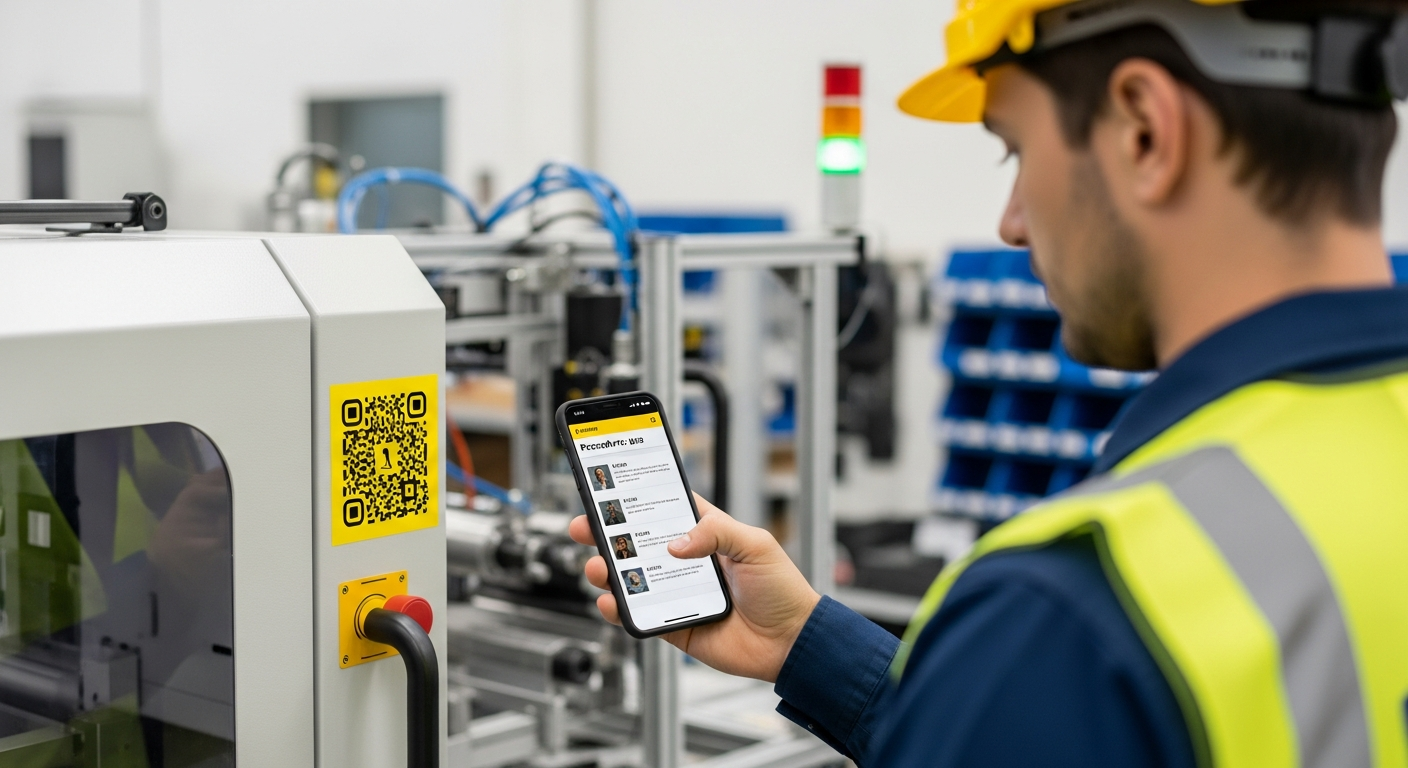
Point-of-need knowledge systems deliver information where work happens, when workers need it. QR codes on machines link directly to relevant procedures. Multilingual support ensures language barriers don't prevent knowledge access. Mobile-first design enables instant retrieval during operations.
This stage prioritizes accessibility over comprehensiveness. A good procedure available in 10 seconds beats a perfect procedure requiring 5 minutes to access. Visual formats work better than text for physical workflows. Step-by-step guidance with images reduces interpretation errors.
The transformation requires rethinking knowledge presentation. Instead of comprehensive manuals, create focused guides for specific situations. Instead of general training materials, develop troubleshooting sequences for exact problems. Instead of one-language documentation, provide automatic translation.
Success metrics shift from documentation completeness to knowledge accessibility. Measure time from problem identification to solution access. Track completion rates for procedure guides. Monitor multilingual usage patterns to identify knowledge gaps.
Stage 4: Self-updating expertise networks
Stage 4 systems capture knowledge automatically during regular operations. Instead of asking experts to document procedures separately, the system records expertise as work happens. Video capture during routine tasks creates knowledge assets without disrupting workflow.
This approach addresses the fundamental challenge of knowledge sharing: experts are too busy being experts to document their expertise. By capturing knowledge during normal operations, the system builds comprehensive libraries without requiring dedicated documentation time.
The self-updating aspect means knowledge stays current automatically. When procedures change, new captures replace outdated ones. When experts develop new techniques, those improvements integrate into the knowledge base immediately.
Visual capture proves especially effective for manufacturing workflows. A 3-minute video of a changeover procedure conveys more actionable information than a 10-page written manual. Workers understand physical processes better through visual demonstration than text description.
From retiring expert to QR code: The 60-second knowledge capture method
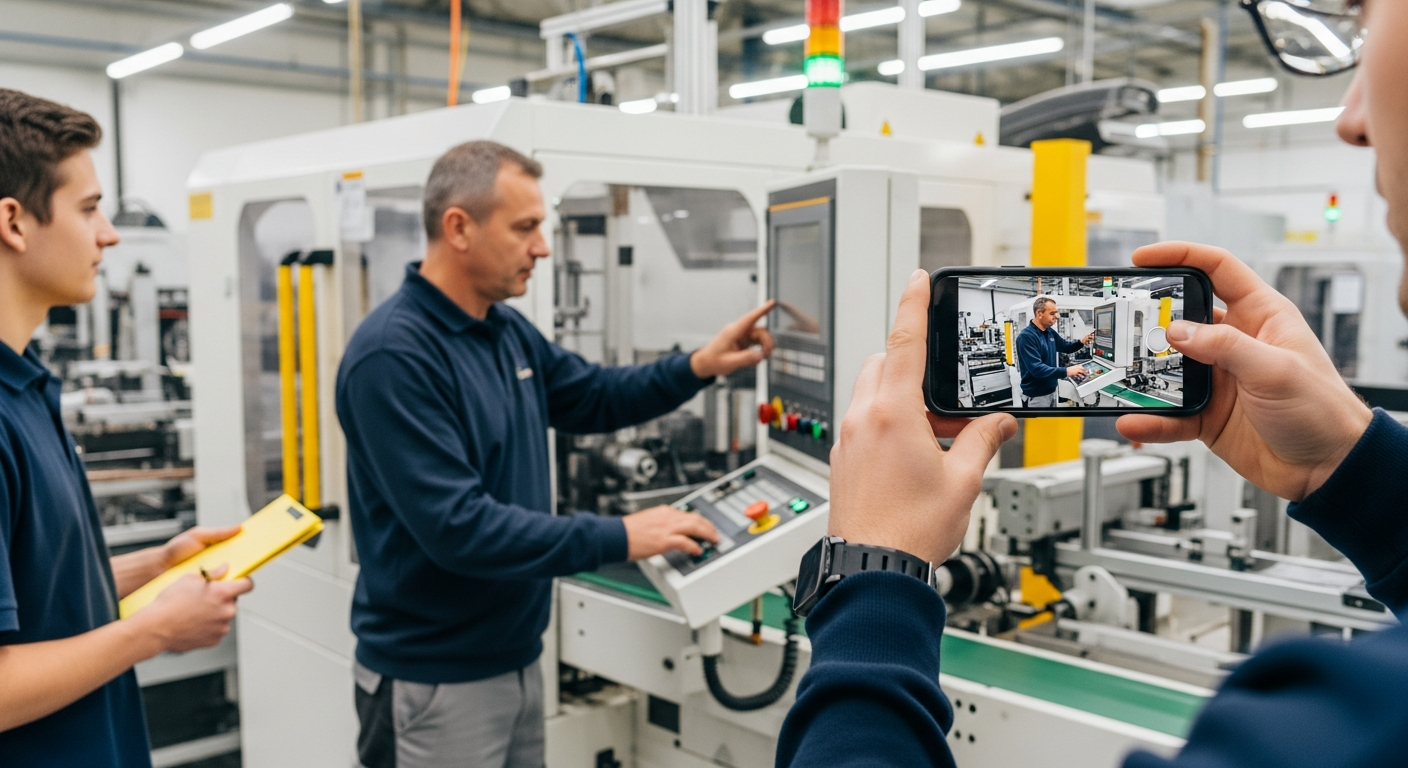
The fastest knowledge capture method films experts performing critical procedures, then uses AI to create step-by-step guides instantly. This approach works because it captures knowledge during actual work, not during separate documentation sessions.
Identify Critical Knowledge
Focus on procedures that only one person knows completely. Prioritize tasks that cause delays when the expert is unavailable. Target knowledge at highest risk of loss.
Record During Normal Operations
Film the expert performing the actual task, not a demonstration. Capture real problem-solving, including decision points and troubleshooting. No script needed, just document actual work.
AI Creates Structured Guides
Upload video to systems like Manual.to that automatically generate step-by-step procedures. AI identifies key actions and creates visual guides with text descriptions. Process takes approximately 60 seconds.
Deploy at Point of Need
Generate QR codes linking directly to procedures. Place codes on relevant machines, workstations, or safety areas. Enable instant access without app downloads or system logins.
Enable Multilingual Access
Automatic translation makes procedures available in multiple languages instantly. Workers access guides in their preferred language without requiring separate documentation efforts.
This method works particularly well for kaizen improvements and poka yoke implementations. When experienced operators develop error-prevention techniques, those improvements can be captured and shared across shifts immediately.
The visual nature of captured knowledge enables better quality control training. New workers see exactly how experienced operators identify defects, perform inspections, and make adjustments. This preserves the pattern recognition skills that take years to develop through experience alone.
Knowledge sharing ROI: Beyond engagement metrics
Traditional knowledge sharing ROI focuses on system usage statistics: number of documents created, user login frequency, and content engagement rates. Manufacturing knowledge sharing requires different metrics that reflect operational impact.
| Traditional Metrics | Operational Impact Metrics | Business Value |
|---|---|---|
| Documents created | Problem resolution time | Reduced downtime costs |
| User engagement | Training time reduction | Faster onboarding ROI |
| Content views | Error rate decrease | Quality improvement |
| System adoption | Knowledge retention after departures | Expertise preservation value |
Calculate knowledge sharing ROI using operational improvements, not engagement metrics. Measure downtime reduction when workers can access troubleshooting procedures independently. Track training time savings when new hires use visual guides instead of requiring expert coaching. Monitor quality improvements from standardized procedures.
The most significant ROI comes from expertise preservation. When a master operator with 20 years of experience prepares to retire, capturing their knowledge prevents €300,000 to €800,000 in replacement costs, training time, and lost productivity. One successful knowledge capture project often justifies the entire program investment.
However, video-based knowledge capture doesn't work for everything. Complex diagnostic trees with multiple branching paths still require traditional flowchart documentation. Highly technical calculations need structured formats rather than visual demonstration. The approach works best for physical procedures and hands-on troubleshooting.
How do you measure knowledge sharing effectiveness in manufacturing?
What's the difference between knowledge sharing and knowledge management?
How do you capture knowledge from retiring experts quickly?
Why do knowledge sharing platforms fail during emergencies?
How do multilingual teams share operational knowledge effectively?
What knowledge should be prioritized for sharing in manufacturing?
How does knowledge sharing integrate with lean manufacturing systems?
What role does knowledge sharing play in improving OEE?
Sources
Start capturing expertise before it walks out the door
Transform knowledge sharing from perfect documentation to instant accessibility.
Try NowBook a Demo