
Most MTTR improvement initiatives fail because they optimize the wrong bottleneck. The real problem isn't repair speed . it's knowledge access speed.
9 min read
2:47 AM. Pharmaceutical production line at P&G's Brussels facility shuts down. Hydraulic pressure fault on Line 3. The maintenance procedure exists . documented, approved, translated. Location: SharePoint folder, buried 6 clicks deep, accessible only from desktop computers. Night shift maintenance team has smartphones. Repair delay: 3 hours. Lost production value: €180,000.
This scenario repeats across manufacturing facilities worldwide. Mean Time to Repair (MTTR) measures the average time required to restore equipment functionality after failure, but achieving low MTTR depends more on knowledge accessibility than repair complexity.
While most organizations focus on faster tools and better training, they miss the fundamental bottleneck: maintenance teams spend more time finding information than executing repairs.
What actually drives MTTR in modern manufacturing

Traditional MTTR analysis focuses on repair complexity, spare parts availability, and technician skill levels. But research shows organizations take an average of 60 days to remediate critical vulnerabilities, suggesting the real bottleneck lies elsewhere.
MTTR calculation appears straightforward: total repair time divided by number of incidents. A facility with 10 hours of repair time across 5 incidents has an MTTR of 2 hours. But this formula obscures the real story.
Information Location Delays
Procedures locked in SharePoint, binders in locked offices, or desktop-only systems when teams need mobile access.
Language Accessibility Gaps
Critical procedures available only in facility's primary language while many maintenance staff are non-native speakers.
Format Incompatibility
Dense text procedures requiring interpretation when visual step-by-step guides would enable immediate action.
Knowledge Verification Bottlenecks
Maintenance teams must locate supervisors or senior technicians to confirm procedure steps instead of accessing verified instructions.
At ABB's automation facility, maintenance delays averaged 45 minutes per incident. Time breakdown analysis revealed 35 minutes spent locating and interpreting procedures, 10 minutes executing repairs. The repair skills existed. The documentation existed. Connection between knowledge and worker failed.
The 60-second knowledge access test (and why most teams fail it)
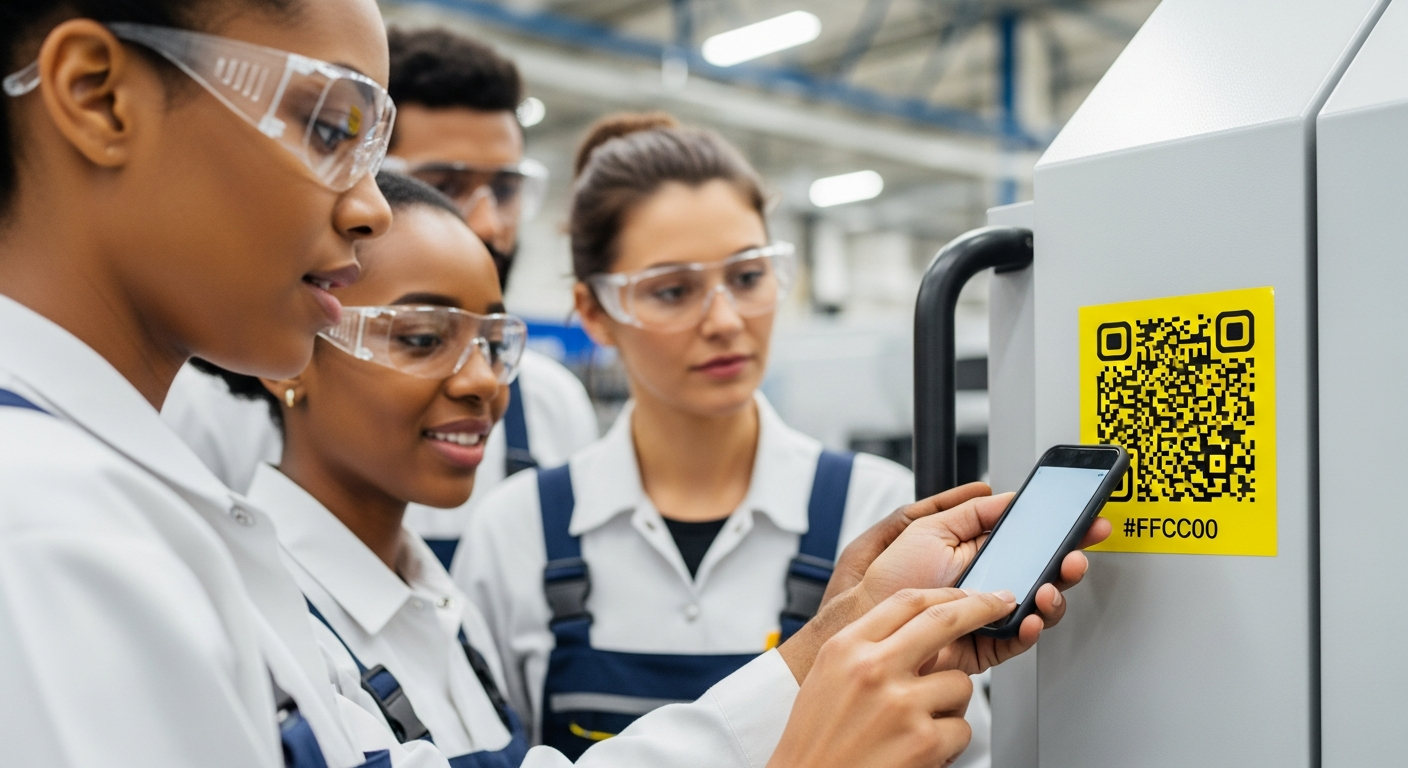
Knowledge access speed determines MTTR more than repair complexity. Test your facility: Can any maintenance worker, using only equipment they carry, access the correct repair procedure for your most critical equipment in under 60 seconds?
Most organizations fail this test. Procedures require multiple login credentials, navigation through folder hierarchies, or physical access to locked areas. By contrast, the same worker can access YouTube repair videos in 15 seconds.
| Access Method | Average Time | Success Rate at 2 AM | Multi-language Support |
|---|---|---|---|
| SharePoint folder | 3-8 minutes | 30% | Limited |
| Physical binder | 5-15 minutes | 45% | None |
| QR code on equipment | 15 seconds | 95% | Full |
| Supervisor consultation | 10-30 minutes | 60% | Variable |
ArcelorMittal's Luxembourg steel plant implemented knowledge retention QR codes on critical equipment. Maintenance MTTR dropped from 3.2 hours to 45 minutes. Same technicians. Same equipment. Different knowledge access speed.
Why your maintenance team knows how to fix it but can't prove it
Documentation exists. Maintenance expertise exists. But connection between documented knowledge and worker capability breaks during actual repairs.
Traditional maintenance documentation assumes desktop computer access, supervisor availability, and native language comprehension. These assumptions fail during shift changes, emergency repairs, and when experienced workers are unavailable.
NIST research on maintenance data standardization reveals that availability and effectiveness metrics directly correlate with how maintenance information is structured and accessed.
Expert Knowledge Capture
Film the senior technician performing the repair. No script needed. Document the actual sequence, not the theoretical procedure.
Visual Instruction Creation
Convert video into step-by-step visual guides. Each step: one image, one action, clear sequence.
Point-of-Need Deployment
Place QR codes directly on equipment. Scan code, access procedure instantly. No login, no navigation, no language barriers.
The multilingual MTTR multiplier most companies ignore
Language barriers create invisible MTTR multiplication across European manufacturing. A hydraulic failure procedure written in German becomes useless to Polish maintenance workers during night shifts.
Professional translation of maintenance procedures requires significant investment per language per manual. Most facilities maintain procedures in one language only, forcing non-native speakers to rely on verbal explanations or Google Translate during emergency repairs.
At Siemens' Romanian facility, MTTR averaged 4.2 hours for equipment with German-only procedures versus 1.8 hours for equipment with Romanian visual guides. Same complexity level. Same technician skill. Different knowledge accessibility.
What most guides get wrong about MTTR improvement
Industry experts focus on automation, predictive maintenance, and faster diagnostic tools. They assume the bottleneck is repair complexity when it's actually knowledge access speed.
Research on Human Mean Time to Recovery (H-MTTR) shows that in safety-critical environments, human response factors often matter more than technical system capabilities. Yet most MTTR improvement programs ignore human knowledge accessibility entirely.
Video-based knowledge capture through tools like Manual.to enables instant translation into 200+ languages via AI, eliminating the translation bottleneck entirely. A procedure filmed once becomes accessible to multilingual teams immediately.
From 4-hour repairs to 20-minute fixes: What actually works
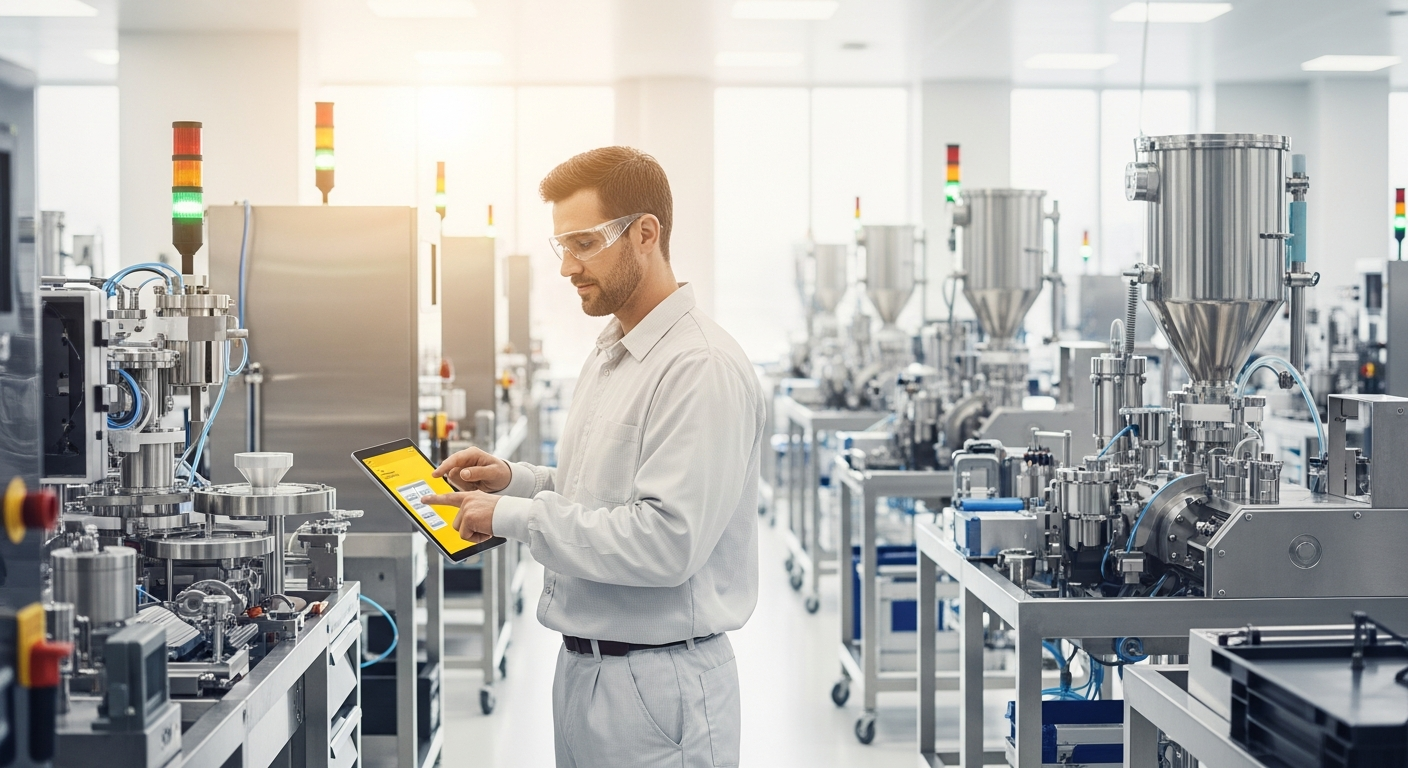
MTTR improvement requires systematic knowledge accessibility optimization, not just better tools or training.
Successful MTTR reduction follows a consistent pattern: capture knowledge at its source, make it instantly accessible, eliminate interpretation delays.
Gemba Walk Knowledge Capture
Use gemba walk principles to identify knowledge gaps. Film experts performing actual repairs, not training simulations.
Poka Yoke Information Design
Apply poka yoke error prevention to procedure design. One step, one image, impossible to misinterpret.
Kaizen Continuous Improvement
Implement kaizen feedback loops. Track which steps cause delays, refine procedures based on actual usage data.
This approach doesn't work for everything. Complex troubleshooting trees involving multiple system interactions still need written documentation with decision matrices. But for 80% of routine maintenance tasks, visual procedures eliminate knowledge access delays entirely.
Integration with lean manufacturing systems ensures procedure updates follow standardized workflows, maintaining accuracy while enabling rapid deployment of improvements.
Calculating the true cost of high MTTR (beyond downtime)
Traditional MTTR cost calculations focus only on production downtime. Real costs include safety incidents, quality degradation, knowledge loss acceleration, and regulatory non-compliance.
| Cost Category | Typical Impact per Incident | Hidden Multiplier |
|---|---|---|
| Direct downtime | €5,000-50,000 | 1x |
| Quality degradation | €2,000-15,000 | 3x when procedures unclear |
| Safety incidents | €10,000-100,000 | 5x with improvised repairs |
| Knowledge loss acceleration | €20,000-200,000 | Permanent if expert leaves |
At Michelin's tire manufacturing facility, unclear maintenance procedures led to a hydraulic fluid leak during emergency repairs. Production downtime: €25,000. Environmental cleanup: €80,000. Regulatory investigation: €120,000. Total incident cost: €225,000. A clear visual procedure would have prevented improvised repairs.
Quality control integration becomes critical when maintenance procedures affect product specifications. Clear standard operating procedures prevent quality deviations during repair processes.
MTTR improvement through knowledge accessibility delivers compound returns: faster repairs, fewer safety incidents, maintained quality standards, preserved expert knowledge.
Why traditional MTTR metrics miss the real problem
Current MTTR measurement assumes repair time equals problem-solving time. This assumption fails when considering human factors in maintenance execution.
A technician standing in front of broken equipment with unclear procedures experiences cognitive load that affects decision-making speed. Visual, step-by-step guidance reduces cognitive burden, enabling faster, more accurate repairs.
Upskilling programs become more effective when supported by accessible knowledge systems. Workers learn faster when they can reference procedures independently rather than waiting for expert availability.
Standard work procedures provide the foundation for consistent MTTR performance across shifts and personnel changes. But standardization only works when procedures are actually accessible to workers who need them.
How is MTTR calculated in manufacturing?
What's considered a good MTTR for production equipment?
How do language barriers affect MTTR?
Can visual instructions reduce MTTR?
What's the difference between MTTR and MTBF?
How do you improve MTTR without hiring more technicians?
Sources
Start reducing your MTTR in 60 seconds
Film one repair, create one visual guide, see the difference.
Try Now Book a Demo