
At 4:30 PM on a Friday, Klaus Weber clocks out of ArcelorMittal's Luxembourg steel plant for the last time. In his head: 28 years of metallurgy expertise, including the exact temperature variance technique that prevents stress fractures in high-grade steel. Monday morning, his replacement starts. The apprenticeship program exists, the training materials are complete, but Klaus's critical judgment calls? Gone forever. Without proper skill management, things go wrong.
7 min read
Skill management is the systematic capture, preservation, and transfer of critical operational expertise to maintain productivity during workforce changes. But most organizations treat it as a development problem when it's actually a preservation crisis. While companies invest millions in training platforms and competency frameworks, their most valuable knowledge walks out the door every Friday.
This isn't about building new skills. It's about capturing existing expertise before it disappears.
Why Traditional Skill Management Fails During Knowledge Transfer Crises
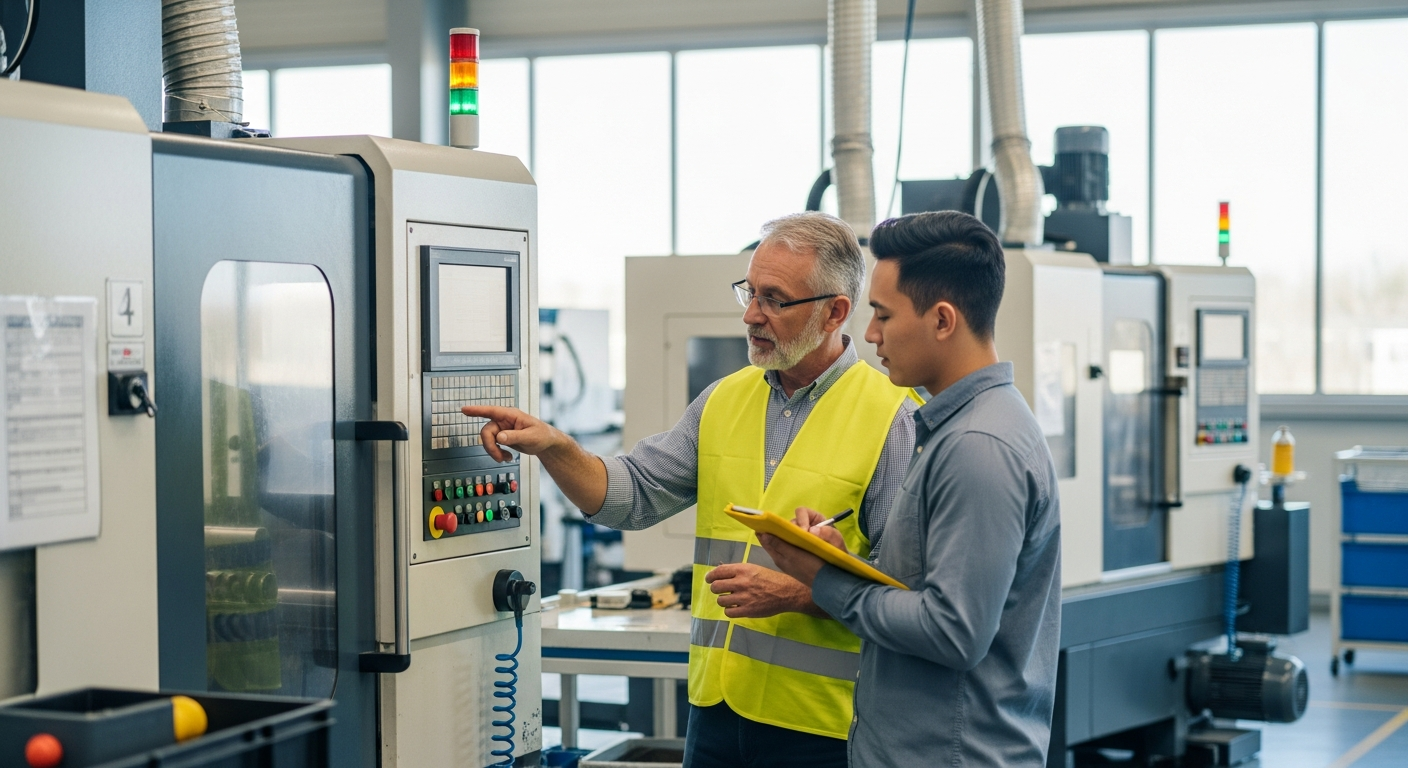
Most skill management programs focus on developing capabilities rather than preserving them. The standard approach: assess current skills, identify gaps, build training programs, measure outcomes. This works for standardized competencies but fails catastrophically with tacit knowledge.
The problem lies in what skill management systems actually capture. Competency matrices track certifications, not judgment calls. Learning management systems store procedures, not the micro-adjustments that prevent equipment failure. Performance reviews measure outcomes, not the sensory cues that signal trouble.
Real expertise lives in pattern recognition, muscle memory, and situational awareness. A chemical plant operator doesn't just follow procedures; they hear when a pump sounds wrong, smell when a reaction isn't progressing correctly, feel when pressure builds differently. This knowledge doesn't transfer through classroom training or written documentation.
Documentation Gaps
Critical procedures exist only in experts' memories. Written SOPs cover the basics but miss the nuances that prevent failures.
Training Lag
New hires need significant time to match expert performance. During this period, productivity drops while error rates increase.
Knowledge Silos
Expertise concentrates in individual experts rather than transferring to teams. Single points of failure across critical operations.
The semiconductor industry learned this lesson expensively. When Taiwan's TSMC faced talent shortages, they discovered that their most critical processes depended on engineers who could "feel" when chip fabrication was going wrong. No amount of formal training could replicate this intuition quickly enough.
The Hidden Cost of Expert Knowledge Loss in Manufacturing

Expert knowledge loss costs more than replacement salaries. It cascades through quality, efficiency, safety, and customer satisfaction. According to the Manufacturing Institute, the average cost per new manufacturing hire ranges from $7,500-$14,000, but this doesn't capture the productivity impact during the learning curve.
| Impact Category | Immediate Effect | Business Consequence |
|---|---|---|
| Productivity Drop | Reduced efficiency during replacement training | Extended learning curves, output reduction |
| Quality Issues | Higher defect rates from inexperience | Rework costs, customer complaints |
| Safety Incidents | Higher near-miss frequency | Potential injuries, regulatory scrutiny |
| Equipment Damage | Improper operation, delayed maintenance | Repair costs, unplanned downtime |
These numbers compound when multiple experts leave simultaneously. A pharmaceutical plant in Switzerland lost three master operators within six months. The result: two batch failures worth €2.1 million, a six-week production delay, and regulatory scrutiny that nearly cost their manufacturing license.
The aerospace sector faces particularly acute risks. Boeing's 737 MAX crisis partly stemmed from institutional knowledge gaps after experienced engineers retired. Critical safety considerations that older engineers carried intuitively weren't adequately transferred to newer teams.
Video-based knowledge retention systems can significantly reduce these replacement costs. Instead of learning through trial and error, new operators learn from captured expertise of their predecessors.
The Skill Loss Cascade: Four Stages of Expertise Disappearance
Expertise doesn't vanish overnight. It follows a predictable four-stage cascade, with intervention points at each stage. Understanding this progression helps organizations act before critical knowledge disappears.
Expert Identification Phase
Recognizing which knowledge is at risk. This goes beyond obvious experts to include workers with specialized troubleshooting abilities, equipment-specific knowledge, or customer relationship insights.
Knowledge Extraction Phase
Capturing tacit knowledge while experts are still available. Traditional interviews miss significant portions of operational knowledge. Video demonstration captures both explicit procedures and implicit decision-making.
Documentation Phase
Converting captured knowledge into accessible formats. Text-heavy manuals fail on the shop floor. Visual, step-by-step guides with multilingual support reach diverse workforces effectively.
Deployment Phase
Making preserved knowledge accessible when needed. QR codes on equipment, mobile-first access, and integration with existing workflows ensure knowledge transfer actually happens.
The cascade accelerates during the final period before retirement. Experts begin mentally disengaging, knowledge transfer becomes rushed, and critical details get overlooked. Organizations that start preservation efforts well before planned retirements see better knowledge retention rates.
However, this approach has limitations. Video capture works excellently for procedural knowledge and troubleshooting sequences, but complex analytical thinking and strategic decision-making still require mentorship and hands-on experience alongside preserved documentation.
Beyond Training Programs: Visual Knowledge Capture for Skill Preservation

Visual knowledge capture transforms how organizations preserve expertise. Instead of asking experts to write what they know, film them doing what they do best. The smartphone in every worker's pocket becomes a knowledge preservation tool.
The process starts with identifying critical procedures that depend on individual expertise. Film the expert performing the task naturally, without scripts or special preparation. AI-powered tools like Manual.to automatically break down the video into step-by-step guides, preserving both the procedure and the expert's decision-making cues.
This methodology excels because it captures context alongside content. Traditional documentation lists what to do. Visual capture shows how experts actually do it, including the subtle cues they use to make real-time adjustments.
Manufacturing environments particularly benefit from this approach. A gemba walk combined with video capture sessions can preserve decades of operational knowledge in weeks. The key is filming during actual production, not staged demonstrations.
The impact extends beyond immediate knowledge transfer. Visual guides enable faster employee onboarding, reduce error rates during complex procedures, and provide 24/7 access to expert guidance without requiring the expert's physical presence.
Multilingual Skill Transfer: Managing Expertise Across Language Barriers
Global manufacturing faces a unique skill management challenge: preserving and transferring expertise across language barriers. A German engineer's process improvement can't benefit Polish operators if language blocks knowledge transfer.
Traditional translation approaches fail because they're too slow and expensive. Professional translation of technical procedures costs thousands of euros per language. By the time translations are complete, procedures have often changed, making the documentation obsolete.
Modern AI translation changes this dynamic entirely. Video-based knowledge capture with automatic translation enables real-time, multilingual skill transfer. An expert creates a procedure guide in their native language, and workers worldwide access it in theirs.
This approach supports continuous improvement initiatives like kaizen across international operations. Process improvements discovered at one facility transfer immediately to others, regardless of local language differences.
What most skill management guides get wrong about expertise transfer
Most approaches treat skill management as an HR function focused on training programs and competency assessments. They're solving the wrong problem.
The real challenge isn't developing new skills, it's preserving existing expertise before it disappears. Companies don't need better learning platforms; they need better knowledge capture systems that work at the speed of retirement.
European manufacturers particularly benefit from this approach. With 27 official languages across EU member states and increasingly diverse workforces, traditional documentation simply can't keep pace with operational needs.
The integration with lean manufacturing systems creates additional value. Error prevention techniques like poka yoke can be documented visually and shared across facilities instantly, standardizing quality control methods regardless of local language capabilities.
Building Skill Management Systems That Survive Workforce Changes
Sustainable skill management requires systems that function independently of individual experts. The goal isn't perfect knowledge transfer; it's building organizational resilience that maintains operational capability during workforce transitions.
Start with critical path analysis. Identify which procedures, if lost, would cause the most operational disruption. Focus preservation efforts on these high-impact areas first. A transformation digitale approach works better than trying to capture everything simultaneously.
Build preservation into daily workflows rather than treating it as a separate initiative. When experts perform critical procedures, capture them. When problems get solved, document solutions. When improvements get implemented, preserve the methodology.
The measurement framework should track both knowledge preservation and transfer effectiveness. Key metrics include:
- Percentage of critical procedures with visual guides
- Time-to-competency for new hires in documented vs. undocumented areas
- Expert availability reduction (can operations continue when experts are unavailable?)
- Knowledge decay rate (how quickly do preserved procedures become obsolete?)
Integration with existing systems accelerates adoption. Link preserved knowledge to quality control processes, connect troubleshooting guides to maintenance systems, embed procedures in work order workflows.
Success requires treating skill management as operational infrastructure, not a training program. Just as manufacturers invest in equipment maintenance to prevent failures, they must invest in knowledge preservation to prevent expertise loss.
Organizations that implement comprehensive visual knowledge capture report faster recovery times when key personnel leave unexpectedly. The investment in preservation pays for itself through reduced disruption costs alone.
What is the difference between skill management and training?
How much does expert knowledge loss actually cost?
How long does it take to implement visual knowledge capture?
What technology is required for skill preservation?
How do you handle skill transfer across language barriers?
What are the maintenance requirements for preserved knowledge?
Sources
- McKinsey & Company, "Manufacturing's skills shortage: The overlooked driver of poor performance", 2023
- Manufacturing Institute & Deloitte, "The Manufacturing Skills Gap Study", 2024
- U.S. Bureau of Labor Statistics, "Job Openings and Labor Turnover Summary", 2024
- Panopto, "The State of Workplace Knowledge Report: Tribal Knowledge in the Modern Workplace", 2023
Preserve your critical expertise before it walks out the door
Stop losing decades of knowledge when experts retire.
Try NowBook a Demo